
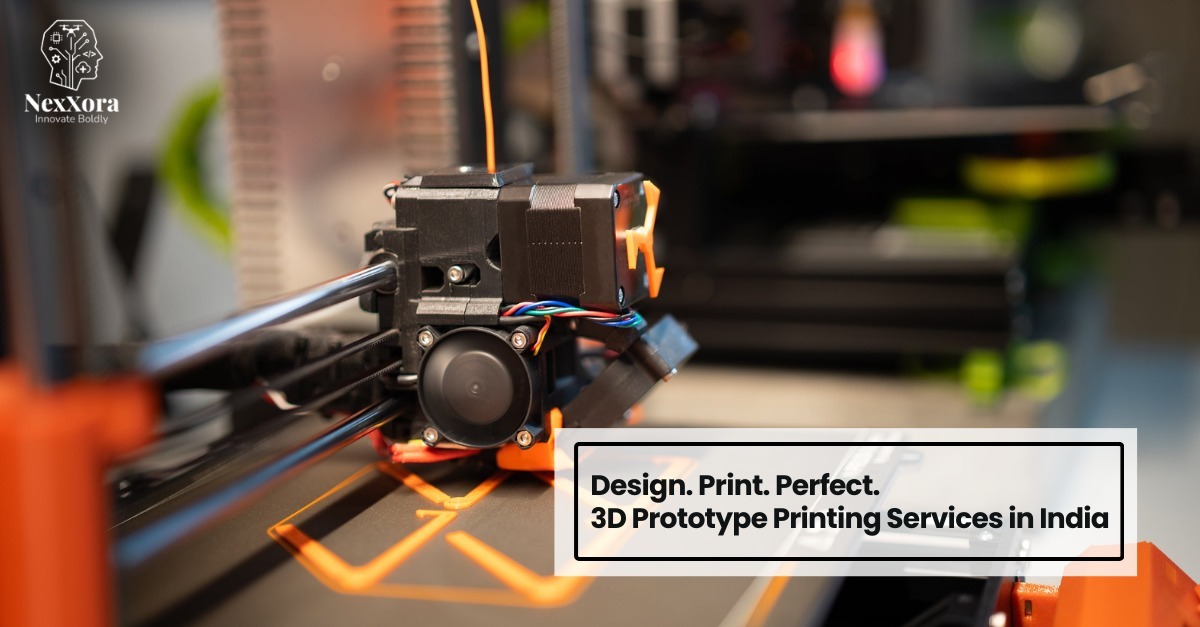
In the current scenario of a competitive engineering and products environment, 3D Prototype Printing Services in India and rapid prototyping have emerged as key areas of focus for modern product prototype development. By utilizing the latest 3D prototype printing services available in India, companies can now accelerate innovation, verify intricate designs, and move effortlessly from concept to production.
The 3D printing and additive manufacturing industry in India is expanding rapidly due to the increasing adoption of cutting-edge technologies in the automotive, healthcare, aerospace, and industrial industries. The 3D Prototype Printing Services in India sector is expected to maintain its robust growth pattern, as companies increasingly turn to digital manufacturing processes to minimize time-to-market and development costs.
- What is Rapid Prototyping in 3D Printing?
- Why 3D Prototype Printing Services Matter for Product Development
- Key Technologies in 3D Prototype Printing
- Latest Insights: India’s Rapid Prototyping and Additive Manufacturing Market
- Applications of Rapid Prototyping Services
- Best Practices for Effective Prototype Development
- Why Choose Nexxora?
- Conclusion
- Frequently Asked Questions (FAQs) – 3D Prototype Printing Services in India
What is Rapid Prototyping in 3D Printing?
In the current scenario of a competitive engineering and product environment, rapid prototyping has emerged as a key foundation of contemporary product prototype development. By taking advantage of advanced 3D prototype printing services in India, companies can speed up innovation, test complex prototypes, and move from concept to production with ease.
The 3D printing and additive manufacturing landscape in India is expanding rapidly due to the increasing adoption of advanced technologies in the automotive, healthcare, aerospace, and industrial domains. The 3D printing industry in India is expected to maintain its strong growth trend, as companies increasingly adopt digital manufacturing processes to minimize time-to-market and development costs.
Why 3D Prototype Printing Services Matter for Product Development
Accelerated Iteration Cycles
One of the most powerful advantages of rapid prototyping is the ability to iterate quickly. By creating multiple versions of a design in a short period of time, product development teams can reach prototype design validation faster, making better decisions and shortening development time.
Current 3D printing solutions can create functional parts in as little as 1-3 business days, allowing designers to validate fit, form, and function before investing in costly tooling.
Enhanced Engineering Prototypes
Engineering prototypes created using 3D printing are more than just visual mock-ups; they can be functional, load-bearing, and performance-verified parts. Materials from reinforced polymers to metal composites enable prototypes to behave like the final product under real-world stress and operating conditions.
By facilitating engineering prototypes that exhibit similar end-use characteristics, additive technology enables robust validation processes, from structural testing to assembly validation.
Cost and Time Efficiency
Rapid prototyping makes it unnecessary to have dedicated tooling or molds early on in a project, thus reducing costs significantly. Traditional fabrication methods require investment in specialized fixtures and tooling before any part is made; this bottleneck is eliminated in additive manufacturing.
The cost-effectiveness and rapid turnaround times offered by additive manufacturing enable startups and established companies to safeguard their competitive advantage.
Key Technologies in 3D Prototype Printing
Effective prototype development projects utilize the following additive technologies:
- Fused Deposition Modeling (FDM): Best suited for robust mechanical prototypes with functional testing.
- Stereolithography (SLA): Provides high resolution and smooth surface finish for design validation and consumer product prototyping.
- Selective Laser Sintering (SLS): Produces robust and durable prototypes without support structures—ideal for engineering validation.
- Metal Additive Manufacturing: Employed for high-strength metal prototypes and complex geometries that are difficult to machine.
These additive technologies offer unique benefits in terms of resolution, material properties, and speed of production, making them essential components of any rapid prototype development plan.
Latest Insights: India’s Rapid Prototyping and Additive Manufacturing Market
The Indian 3D printing market is growing at a rapid pace:
The overall 3D printing and additive manufacturing industry is on the verge of a huge growth trajectory, with predictions indicating multi-billion dollar growth in the coming years.
According to a study, the Indian additive manufacturing industry is expected to grow at a CAGR, owing to increased adoption in the industrial sector, government initiatives, and the need for customized manufacturing solutions.
This is triggering investments in prototype development centers, innovation hubs, and localized design-to-manufacturing solutions, thereby boosting the development infrastructure in the country.
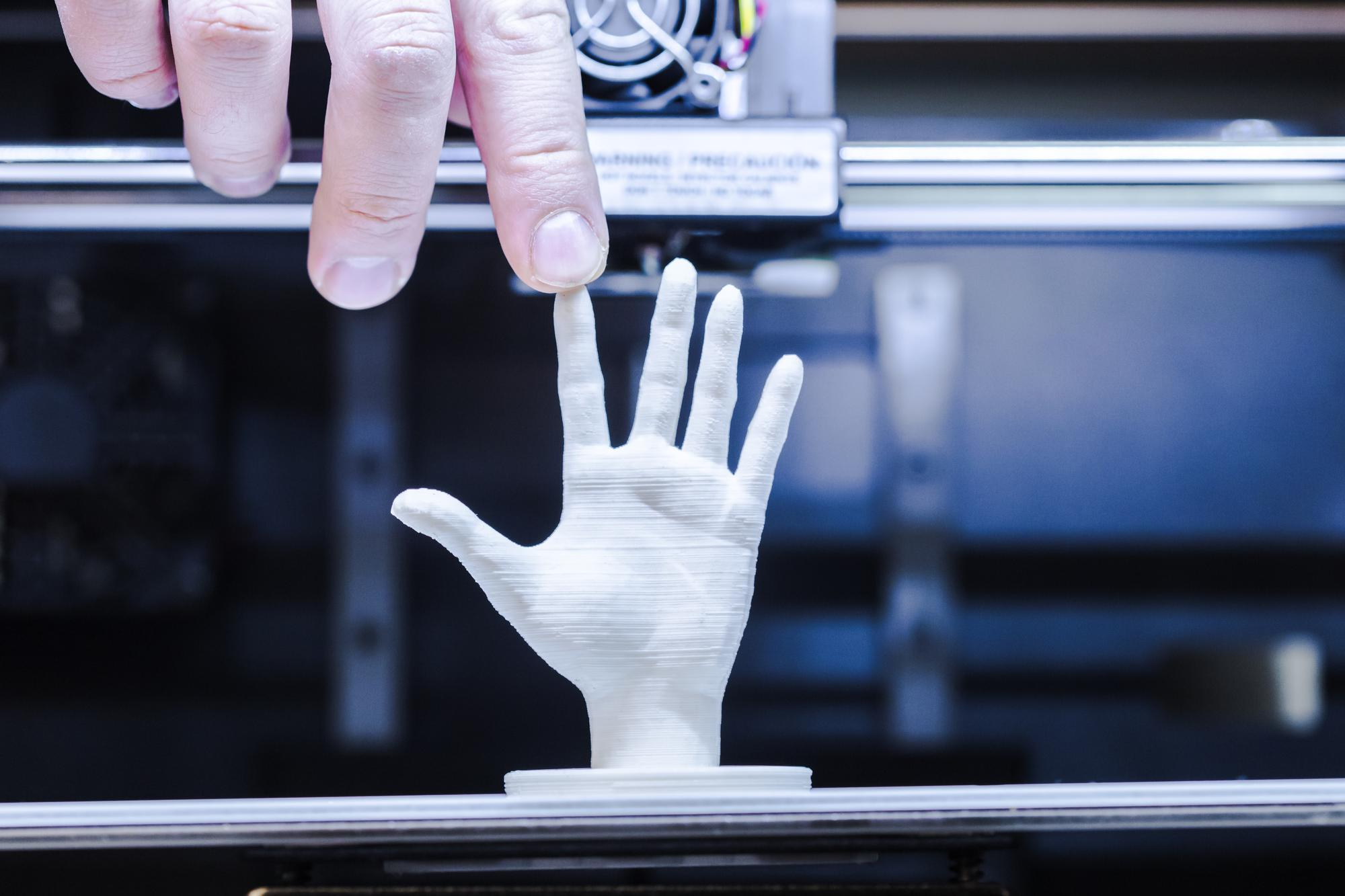
Applications of Rapid Prototyping Services
Rapid prototyping has become an essential part of a broad range of industries:
- Automotive & Mobility: Creating engine parts, cases, and ergonomic fixtures.
- Healthcare & MedTech: Manufacturing surgical guides, custom implants, and diagnostic equipment.
- Consumer Products: Refining product design, ergonomics, and packaging.
- Aerospace & Defense: Creating complex, lightweight parts and functional models.
The above-mentioned applications demonstrate how additive manufacturing enables engineering teams to innovate and iterate with confidence.
Best Practices for Effective Prototype Development
To fully leverage the advantages of rapid prototyping:
- Begin with Optimal CAD Models: Optimize designs for the additive process, considering wall thickness, support structures, and material characteristics.
- Design Iterations Based on Data: Employ engineering prototypes to gather performance information and drive design optimization.
- Select Materials Appropriately: Select materials suited to the intended use of the prototype—functional verification versus aesthetic validation.
- Implement Quality Verification: Utilize dimensional inspection and testing procedures to verify prototype accuracy and consistency.
This structured approach enables faster readiness of products with reduced risks before embarking on volume production.
Why Choose Nexxora?
When it comes to the task of turning innovative concepts into high-quality prototypes, Nexxora is the name that stands out as a reliable partner. By using the latest advancements in rapid prototyping and additive manufacturing, Nexxora makes sure that every project related to product prototype development is completed with precision, speed, and accuracy. The company’s knowledge and expertise in prototype validation and engineering prototype development enable companies to test, develop, and optimize their designs before finally going into production. By using advanced technology and a skilled team, Nexxora is able to provide prototypes that not only meet the required technical standards but also help to accelerate innovation. Learn how Nexxora can help turn your ideas into reality
Conclusion
The 3D prototype printing services in India are revolutionizing the way products are engineered, tested, and launched in the market. Rapid prototyping is at the forefront of this revolution, and it enables companies to achieve faster development cycles, make confident engineering judgments, and accelerate time-to-market in today’s competitive environment.
Whether you are a startup company working on your first design or an established company working on complex assemblies, adopting additive technology enables you to Design. Print. Perfect. your next breakthrough
Frequently Asked Questions (FAQs) – 3D Prototype Printing Services in India
- What is rapid prototyping?
Rapid prototyping is the process of quickly creating physical prototypes from CAD designs using 3D printing or additive manufacturing.
- Why is rapid prototyping important for product prototype development?
It accelerates design iterations, validates engineering concepts, and reduces time-to-market.
- What materials and technologies are used in 3D prototype printing?
Technologies include FDM, SLA, SLS, and metal 3D printing, using plastics, resins, and metals.
- How does prototype design validation work?
Prototypes are tested for fit, function, and performance to ensure they meet technical and engineering requirements.
- Why should businesses choose Nexxora for prototyping services?
Nexxora delivers precise, functional, and high-quality engineering prototypes using advanced rapid prototyping and additive manufacturing processes.






No comment