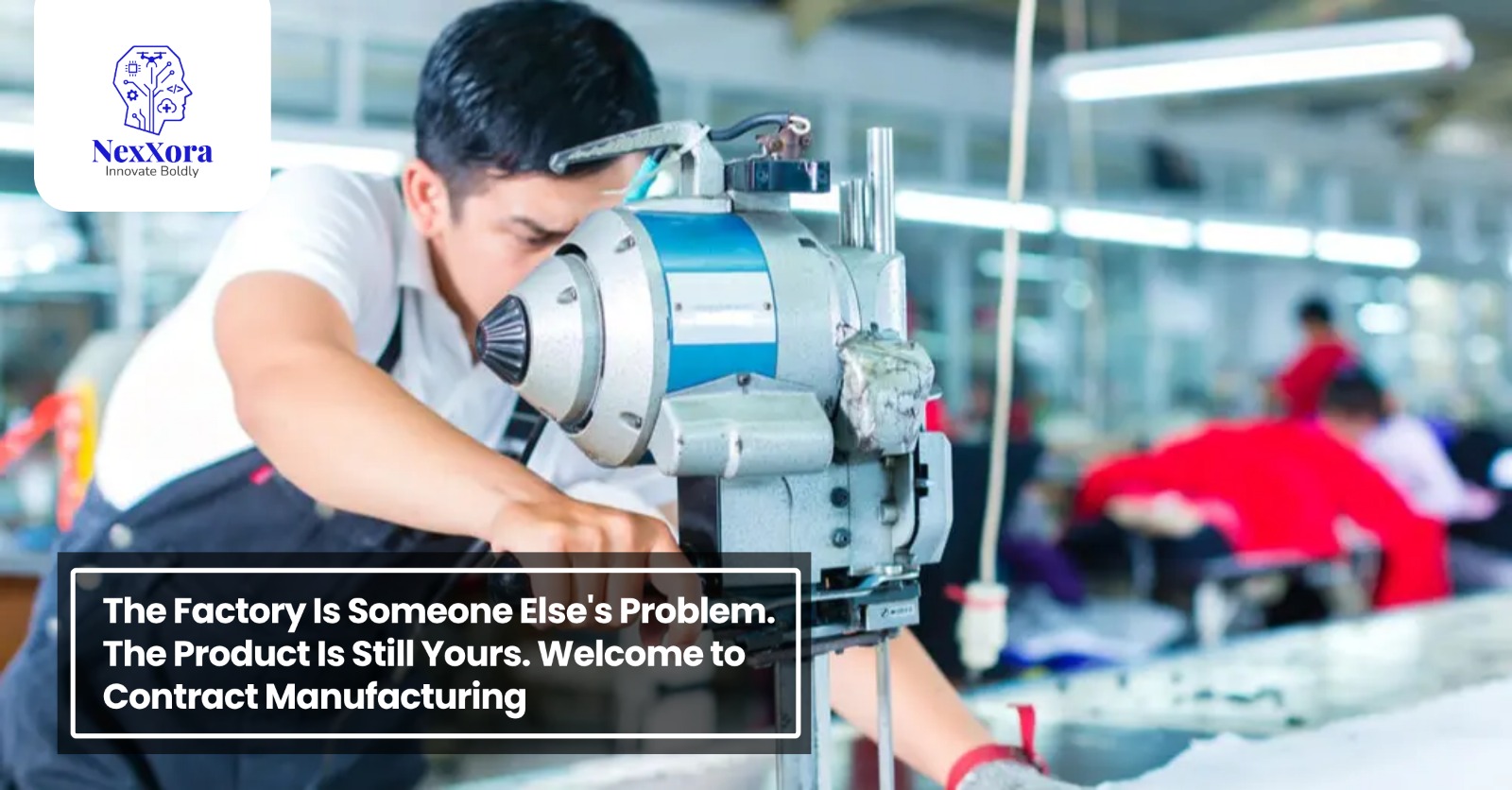
In such a fiercely competitive global market, companies need to continually innovate and cut costs by ensuring their products are developed efficiently and delivered on time. Constructing and operating a state-of-the-art manufacturing facility is no longer the only way forward. Companies have discovered that they can benefit from contract manufacturing to concentrate on innovation, branding, and a high-quality customer experience.
Regardless of whether it is electronics, healthcare, automotive, or consumer goods industries, firms around the world are utilizing contract manufacturing to their advantage. Though the factory might not belong to you, the brand, the quality, and the product surely do!
Nexxora Inc & Nexxora Technology offer intelligent engineering solutions and manufacturing strategies to help companies make
- What Is Contract Manufacturing?
- Why Contract Manufacturing Is Gaining Popularity
- Advantages of Contract Manufacturing
- Contract Manufacturing Process
- Industries Dependent on Contract Manufacturing
- Comparison between Outsourcing Production and Traditional Manufacturing Ownership
- Supply Chain Optimization in Contract Manufacturing
- Best Practices for Successful Contract Manufacturing
- Sustainability in Contract Manufacturing
- Why Contract Manufacturing Is the Future of Global Production
- How Does Nexxora Drive the Evolution of Manufacturing?
- Conclusion
- FAQs
What Is Contract Manufacturing?
Contract manufacturing is a business process in which a company chooses to outsource the production of its products to an external manufacturer. This means that instead of setting up and maintaining extensive manufacturing facilities, machines, labor, and other related processes, companies decide to partner with manufacturers who manufacture their products for them.
The outsourcing company retains the right to:
- Product design
- Intellectual property
- Brand building
- Product specifications
- Marketing strategies
While the contracted manufacturing organization manages the process of:
- Production
- Manufacturing
- Quality control
- Logistics coordination
- Product packaging
This way, companies can make the best use of their expertise without compromising on production capabilities.
Why Contract Manufacturing Is Gaining Popularity
There has been an exponential increase in demand for contract manufacturing over the past ten years. Many companies have started understanding that manufacturing factories do not necessarily add to their value proposition.
Some reasons behind this growth trend include:
- High operational costs
- Expanding global logistics networks
- Shorter product cycles
- Increased need for specialized manufacturing services
- Growing competition
- Scalability
Businesses today prioritize agility over ownership.
Advantages of Contract Manufacturing
There are many benefits associated with contract manufacturing. Some of the key advantages include:
1.Lower Operating Costs
Lower operating costs are the primary reason why many businesses opt for contract manufacturing services.
Creating a new production plant requires significant investments in:
- Production equipment
- Maintenance costs
- Skilled workers
- Energy usage
- Compliance with regulations
- New equipment installations
Through contract manufacturing, businesses get to bypass the costly process of building and managing an expensive production facility.
2.Increased Speed to Market
The ability to produce goods quickly is one of the most crucial elements for success today.
Delayed production results in missed sales and opportunities. Contract manufacturing allows companies to develop new products faster because of:
- Available production facilities
- Specialized manufacturing teams
- Developed logistics network
- Scalable production methods
3.Utilizing Advanced Manufacturing Knowledge
As technology advances, the manufacturing industry continues to evolve.
Some experienced contract manufacturers specialize in manufacturing products like:
- Precision engineering parts
- Electronic circuit boards
- Advanced machinery controls
- Medical devices
- Automobile parts
- Bulk manufacturing
Through partnerships with specialized manufacturers, businesses gain access to cutting-edge technology without spending heavily on developing in-house capabilities.
4.Enhanced Scalability
The business environment is dynamic and unpredictable.
During peak periods, companies need adequate production capabilities. However, during off-peak seasons, keeping underused factories operational becomes expensive.
Contract manufacturing provides flexibility to scale production up or down based on market demand.
- Emphasizing Core Business Activities
Factory management will require much operational attention.
Contract manufacturing allows companies to concentrate on:
- Developing new products
- Conducting R&D
- Creating and managing brands
- Marketing
- Engaging customers
- Sales generation
Such focus ensures better performance results in the future.
Contract Manufacturing Process
The main stages of contract manufacturing include:
Stage 1: Product Concept Creation, Specifications, and Technical Requirements
In the first place, the hiring company determines the design, technical, and other product specifications.
They include:
- Materials
- Size
- Functional specifications
- Standards
- Compliance requirements
- Stage 2: Partner Selection
Companies select their manufacturing partners depending on:
- Their industry experience
- Technical capabilities
- Certifications
- Manufacturing standards
- Location
Stage 3: Prototype Creation and Testing
Prototypes are created for the purpose of product testing in order to verify their compliance with the design.
This stage makes it possible to make changes before the actual production starts.
Stage 4: Manufacturing and Quality Assurance
In accordance with the agreements, contract manufacturers produce products and ensure that all necessary quality standards are met.
QA procedures may include:
- Inspection testing
- Functional testing
- Materials testing
Stage 5: Packaging and Shipping
In addition to production, many contract manufacturers offer:
- Packaging
- Storage
- Logistics services
This simplifies operations for businesses.
Industries Dependent on Contract Manufacturing
Contract manufacturing is expanding in some industries.
Electronics Industry
Electronics firms commonly contract for manufacturing processes in the following areas:
- Printed circuit boards
- Smartphones
- Consumer electronics
- Internet-of-things (IoT) devices
- Industrial electronics
Healthcare & Medical Devices
Manufacturers in healthcare and medical devices utilize contract manufacturing services to manufacture:
- Diagnostic instruments
- Surgical tools
- Wearable devices for health monitoring
- Medical implants
Compliance and accuracy are essential requirements in this industry.
Automotive Industry
Automotive producers outsource the manufacture of various parts, including:
- Electrical systems
- Engine components
- Interior components
- Sensors
- Electric vehicle (EV) components
This makes vehicle production more scalable and efficient.
Consumer Goods Industry
Companies outsource the manufacture of:
- Household goods
- Cosmetics
- Home appliances
- Packaging solutions
Aerospace & Defense
Aerospace manufacturing requires high precision and often uses contract manufacturing specialists for highly engineered parts.
Comparison between Outsourcing Production and Traditional Manufacturing Ownership
Outsourcing production is compared against traditional manufacturing by business leaders.
Challenges associated with in-house manufacturing include:
- High start-up costs
- Facility upkeep
- Equipment updates
- Labor management
- Contract Manufacturing Benefits
- Low operational demands
- Faster scalability
- Specialization expertise
- Greater flexibility
- Lower financial risks
Contract manufacturing is a more sustainable option for many businesses.
Technology in the Evolution of Contract Manufacturing
Technology has changed the future of contract manufacturing.
Today’s manufacturers utilize:
- Artificial Intelligence
- Industrial Internet of Things (IoT)
- Robotics
- Predictive analytics
- Cloud-based manufacturing solutions
- Digital twins
Such innovations increase efficiency and the quality of products.
Contract Manufacturing and Automation
Automation has become an important part of modern contract manufacturing.
Smart contract manufacturing relies on automation for:
- Precise assembly of products
- Inspection of products
- Handling of materials
- Predictive maintenance
- Monitoring of production in real time
This ensures more precision and minimizes errors.
Artificial Intelligence in Contract Manufacturing
Artificial intelligence enables contract manufacturing companies to:
- Forecast production
- Identify defects
- Optimize supply chains
- Monitor energy consumption
- Predict maintenance problems
- Predictive maintenance
Data-driven manufacturing improves efficiency and decision-making.
Supply Chain Optimization in Contract Manufacturing
Global supply chains have become more complicated.
For effective contract manufacturing, supply chain management is important.
- Focus areas include:
- Supplier dependability
- Inventory control
- Optimization of transportation
- Risk management
- Real-time transparency
Modern digital supply chain technologies allow companies to enhance resilience and continuity.
Challenges in Contract Manufacturing
Although contract manufacturing provides various benefits, companies still need to address some challenges.
Quality Control Threats
Low-quality products may harm the company’s reputation.
Effective quality control measures are vital.
Intellectual Property Security
Product design and proprietary technology security are crucial.
Companies must implement:
- Legal safeguards
- Secrecy protocols
- Safety systems
Communication and Collaboration
Inter-company communication guarantees proper coordination and accurate manufacturing.
Supply Chain Interference
Worldwide events can impact supply chains.
Diversified supply chain strategies improve resilience.
Best Practices for Successful Contract Manufacturing
For optimum success, companies can adhere to certain best practices.
Select a Suitable Manufacturing Partner
Companies must assess the manufacturer’s competency and credentials thoroughly.
Ensure Proper Documentation
Comprehensive details of the product design will minimize mistakes during production.
Set Quality Standards
Routine inspection and tests guarantee consistent quality.
Develop Long-Term Relationships
Excellent working relationships enhance efficiency and productivity.
Utilize Smart Manufacturing Technologies
These technologies ensure better transparency and analytics in the manufacturing process.
Contract Manufacturing Sustainability
Sustainability has become a significant concern for all industries.
Sustainability in Contract Manufacturing
Contemporary contract manufacturers employ sustainable solutions such as:
- Energy conservation methods
- Waste reduction systems
- Use of eco-materials
- Environmentally friendly packaging
- Reducing carbon footprint
Many companies now prefer working with sustainable manufacturing facilities.
Why Contract Manufacturing Is the Future of Global Production
The future of manufacturing lies in intelligence rather than ownership.
Manufacturers do not have to own their production plants anymore to manufacture premium-quality products.
They only have to concentrate on:
- Innovations
- Brand development
- Customer interaction
- Product strategy
While competent manufacturing partners manage the complexities of the operations.
How Does Nexxora Drive the Evolution of Manufacturing?
In order to stay relevant, businesses need tech-based solutions that enable them to engage in more effective manufacturing processes.
Nexxora Inc offers organizations the opportunity to implement digital transformation into their workflows through intelligent engineering, automation, and innovative manufacturing technologies adapted to today’s industrial landscape.
On the other hand, the company’s Nexxora Technology solutions can help businesses leverage scalable digitalization to optimize their performance, innovate more products, and enhance their smart manufacturing abilities.
The company’s expertise includes assistance with various processes, including:
- Automation
- Engineering
- Product development
- Factory digitalization
- Manufacturing digitalization
With the help of Nexxora, businesses will be able to keep pace with the ever-evolving global market through technological advancements in manufacturing.
Conclusion
The plant may belong to another company, but your product, its quality, and the trust of your clients will always be yours. This is the real value of contract manufacturing.
In a world where speed, efficiency, and innovation determine success, businesses need flexible manufacturing strategies that reduce costs while accelerating growth. Contract manufacturing allows companies to scale intelligently, access specialized expertise, and focus on building stronger products and brands.
As technology continues to reshape global industries, modern manufacturing partnerships will become even more essential for sustainable business success.
FAQs
1. What is contract manufacturing?
Contract manufacturing is a process where a company outsources product manufacturing to a third-party manufacturer while retaining ownership of the product and brand.
2. What are the benefits of contract manufacturing?
Benefits include reduced costs, faster production, scalability, access to expertise, and improved operational efficiency.
3. Which industries use contract manufacturing?
Industries such as electronics, healthcare, automotive, aerospace, and consumer goods widely use contract manufacturing.
4. How does contract manufacturing reduce costs?
Businesses avoid major expenses related to factory infrastructure, equipment, labor, and maintenance.
5. Is contract manufacturing suitable for startups?
Yes. Startups benefit from lower investment requirements and faster market entry.
6. What technologies improve contract manufacturing?
Technologies such as AI, IoT, robotics, automation, and digital twins improve manufacturing efficiency and quality.
7. What are the risks of contract manufacturing?
Potential risks include quality control issues, supply chain disruptions, and intellectual property concerns.
8. How can businesses ensure manufacturing quality?
Businesses should establish strict quality standards, regular inspections, and strong communication with manufacturing partners.
9. What is smart manufacturing?
Smart manufacturing uses digital technologies, automation, and data analytics to improve production efficiency and operational visibility.
10. Why is contract manufacturing becoming popular?
Businesses prefer flexible, scalable, and cost-effective production strategies that allow them to focus on innovation and growth.


No comment