
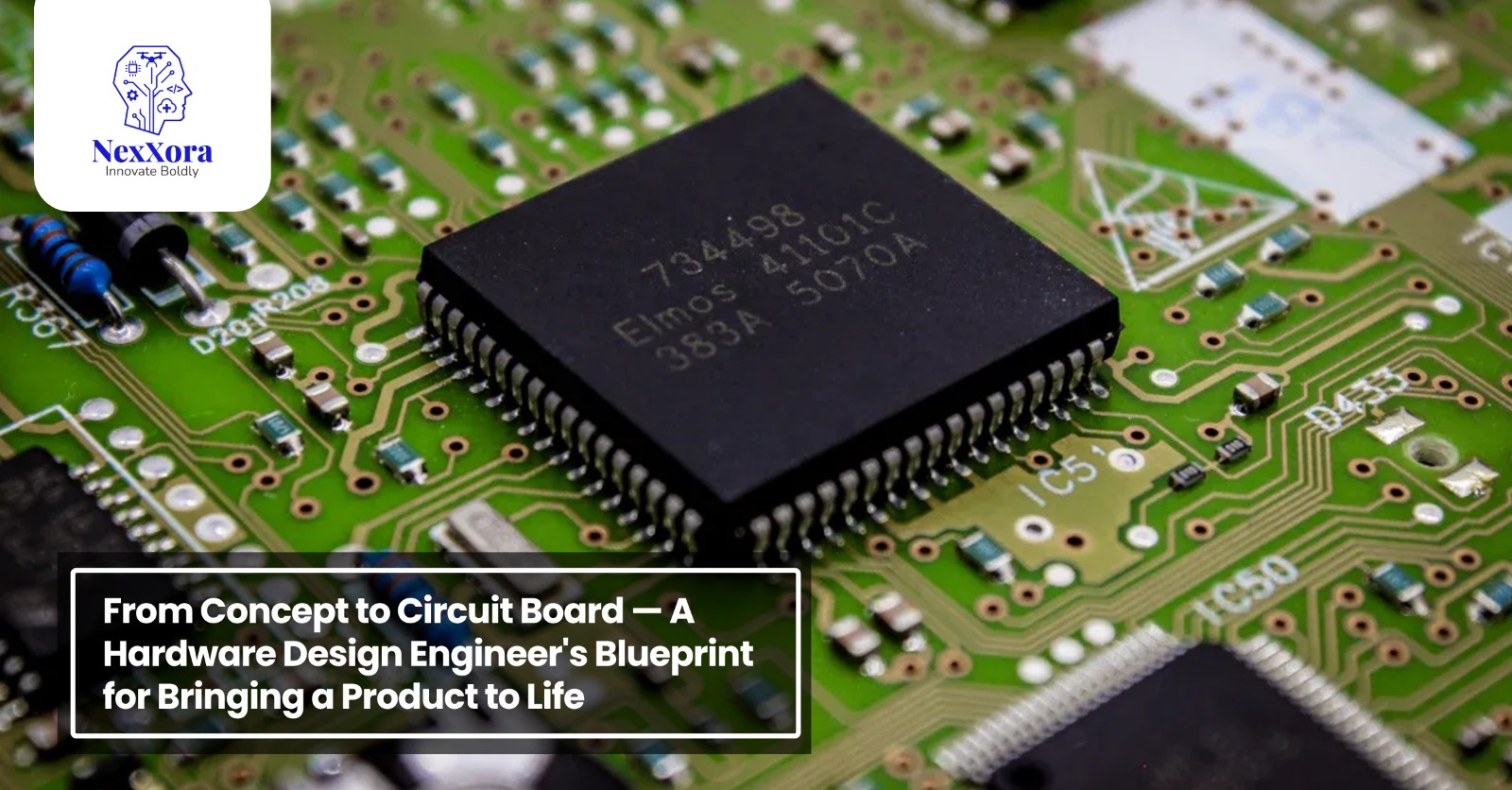
Today, as technology continues to progress at an unprecedented pace, every intelligent device, industrial machinery, IoT device, automotive control unit, and embedded system originates from an initial concept. Bringing a concept to fruition and creating tangible products out of it needs talent, accuracy, and creativity. That is precisely where a hardware design engineer steps in and becomes the core of product development.
Whether it comes to system architecture design, printed circuit board (PCB) design, component selection, prototyping, testing, and manufacturing preparation, a hardware design engineer becomes an essential figure in making today’s electronic products successful.
At Nexxora Inc and Nexxora Technology, sophisticated engineering services allow enterprises to convert ideas into practical, scalable, and manufacturable hardware solutions.
In this blog post, we will discover the whole process of developing hardware products and uncover how a skilled hardware design engineer drives innovation.
- Understanding the Role of a Hardware Design Engineer
- The Entire Product Development Process
- New Technologies Influencing Hardware Design
- Skills Necessary for a Hardware Design Engineer
- Challenges Facing Hardware Products Development
- Reasons Why Your Business Needs an Expert Hardware Design Engineer
- How Nexxora Facilitates Hardware Development
- The Future of Hardware Design Engineering
- Conclusion
- FAQs
Understanding the Role of a Hardware Design Engineer
Hardware design engineers design, develop, test, and optimize physical electronic systems. They have diverse skills covering electronics, embedded systems, PCB design, firmware integration, power systems, and product validation.
In contrast to software development, hardware development involves physical constraints, electrical performance, thermal behavior, manufacturing limitations, and product reliability.
Some key areas that a hardware design engineer works on are:
- Circuit design
- Development of PCB layouts
- Designing embedded hardware systems
- Analysis of signal integrity
- Component selection
- Power management
- Validation and prototyping
- Compliance and certifications
- Manufacturing support
They are an integral part of innovation and design.
The Entire Product Development Process
- Validation of Ideas and Requirement Analysis
Every electronic product starts from an idea. Prior to any hardware design work, the engineering team analyzes various aspects, such as:
- The product goals
- The end-user
- Functional requirements of the product
- Budget constraints
- Power consumption of the system
- Connectivity requirements
- Environment considerations
- Performance requirements
Requirement analysis helps hardware design engineers translate concepts into technical specifications.
Questions Asked in the Requirement Analysis Stage
- What is the problem to be solved by the product?
- What will be the hardware requirements?
- Will it function under extreme conditions?
- Will it need any form of wireless connection?
- Certification needs?
- Cost of manufacture?
Requirement analysis prevents costly redesigns later in development.
- Hardware Architecture Planning
After completing the requirements specification, the second step involves hardware architecture planning.
The design process includes defining the following hardware elements:
- Computing elements
- Sensor devices
- Communication hardware
- Memory systems
- Power supplies
- Interface modules
- Input/Output systems
In general, the hardware design engineer chooses an optimal architecture depending on scalability, performance, reliability, and cost-efficiency.
- Popular Hardware Platforms
- ARM microcontroller boards
- FPGA chips and systems
- Linux-embedded devices
- System-on-chip hardware
- Industrial control hardware
- IoT modules
Hardware architecture serves as the base for the whole product development lifecycle.
- Electronic Circuit Design
Circuit design is one of the most vital stages of hardware development.
At this stage, the hardware design engineer designs the following systems:
- Analog circuits
- Digital circuits
- Regulators
- Signaling systems
- Communications circuits
- Protective elements
Specialized EDA software allows engineers to create detailed schematics of electronic circuits.
- Considerations of Electronic Circuits’ Design
- Voltage regulation
- Noise elimination
- Signal quality
- Thermal management
- EMI protection
- Supply availability
- Power saving
Poor electronic circuitry design may lead to system instability, overheating, and even system failure.
- Component Selection and Optimization
Selection of suitable components is crucial for reliable long-term performance.
A hardware design engineer should evaluate:
- Microcontrollers
- Capacitors
- Resistors
- Integrated circuits
- Sensors
- RF modules
- Connectors
- Voltage regulators
- Considerations of Components’ Selection
- Market availability
- Cost-effectiveness
- Power consumption
- Temperature stability
- Supplier reliability
- Lifecycle duration
Smart component selection reduces manufacturing risks and supply chain issues.
- PCB Design and Layout Development
After the circuit design process, engineers proceed to develop the PCB layout.
The effectiveness of the hardware design relies on the PCB design phase.
- Components of PCB Design
- Placement of components
- Trace routing
- Designing power planes
- Grounding techniques
- EMI shielding
- Thermal management
- Optimizing signal paths
The hardware design engineer guarantees that the PCB design adheres to performance and manufacturing specifications.
- Kinds of PCB Designs
- Single-layer PCB
- Double-layer PCB
- Multi-layer PCB
- Flexible PCB
- High-frequency PCB
- Rigid-flex PCB
Current devices need dense PCB designs to provide advanced functionalities.
- Hardware Design Simulation and Verification
Before developing prototypes, engineers conduct simulations to validate the hardware design.
- Simulation Tests Cover
- Analysis of signal integrity
- Thermal simulation
- Power consumption estimation
- Timing verification
- EMI testing
Engineers can detect errors in their designs by conducting such tests.
Hardware design engineers utilize simulation software to optimize their designs.
- Prototype Development
Prototype development involves turning the hardware design into a physical product.
- Processes Involved in Prototype Development
- Fabrication of PCBs
- Component assembly
- Soldering
- Loading firmware
- Testing the hardware
Prototypes mark the beginning of the product’s physical existence.
- Purpose of Developing Prototypes
- Validate functionality
- Verify system integration
- Detect hardware defects
- Enhance user experience
- Optimize performance
Rapid prototyping accelerates innovation and shortens development cycles.
- Embedded Firmware Integration
Today’s hardware products require firmware.
The hardware design engineer collaborates with the embedded software engineers to embed:
- Device drivers
- Communication protocols
- Sensors control
- Power management
- Real-time processing
- Popular Communication Protocols
- UART
- SPI
- I2C
- CAN
- Ethernet
- Bluetooth
- Wi-Fi
Hardware and firmware coordination is critical for optimal performance.
- Hardware Testing and Validation
Testing ensures the product functions well in real-world situations.
Product validation processes include:
- Functional testing
- Stress testing
- Thermal testing
- Power testing
- Environmental testing
- Reliability testing
- EMI/EMC testing
The hardware design engineer conducts failure analysis and improves the product design.
Significance of Product Validation
Inadequate validation may result in product failure after launch, leading to monetary and reputational damages.
- Regulatory Compliance and Certification
Electronic products frequently need certifications before launching in the market.
- Popular Certifications
- CE Certification
- FCC Certification
- RoHS Compliance
- UL Certification
- ISO Standards
The hardware design engineer confirms the designs comply with the necessary industry requirements.
Compliance testing lowers the risk of potential liabilities.
- Design for Manufacturing (DFM)
Successful prototype development does not ensure efficient manufacturing.
Design for Manufacturing ensures the product is easy to manufacture.
- DFM Factors
- Efficient assembly
- Low manufacturing costs
- Optimal component placement
- Automatic testing capability
- Scalable production
Hardware design engineers work with manufacturers for efficient production.
- Pilot Manufacturing and Optimization
Mass production is preceded by pilot manufacturing.
During this phase, the following aspects need to be identified:
- Manufacturing faults
- Assembling mistakes
- Performing anomalies
- Quality control challenges
The hardware design engineer works to optimize the design process for efficient production.
- Post-Mass Production Assistance
With mass manufacturing, the engineer continues monitoring:
- Product quality
- Manufacturing yield
- Product performance
- Supply chain performance
Consistent product improvement guarantees reliable products.
New Technologies Influencing Hardware Design
As technology advances, the job of a hardware design engineer changes.
Incorporating Artificial Intelligence
The devices incorporating artificial intelligence need specialized hardware.
Internet of Things (IoT)
Devices used in IoT technology require low-energy consumption and efficient communication protocols.
Electric Vehicles
Automotive electronics require efficient embedded systems.
Industrial Automation
There is an increasing need for automation technologies in factories.
Wearable Devices
There is a need for miniaturized electronic devices that consume less power.
Skills Necessary for a Hardware Design Engineer
To thrive in the contemporary engineering industry, one requires proficiency in:
- Circuit design
- PCB design
- Embedded systems
- Signal integrity
- Power electronics
- Simulation software
- Firmware
- Hardware debugging
- Manufacturing process
Problem-solving abilities are also critical.
Challenges Facing Hardware Products Development
Supply Chain Issues
Shortages of components may lead to delays in production.
Thermal Management
Small products may have problems with overheating.
EMI/Signal Integrity Issues
Complex circuitry requires proper routing and grounding in PCBs.
Technological Advancements
Engineers are required to constantly update their knowledge base.
Cost Limitations
Maintaining balance between price and performance is crucial.
Experienced hardware design engineers solve these challenges through meticulous planning and creativity.
Reasons Why Your Business Needs an Expert Hardware Design Engineer
An expert hardware design engineer is capable of making an impact on:
- Product reliability
- Development period
- Manufacturing cost
- Competitiveness in the market
- Scalability
Hardware malfunction will result in:
- Product recall
- Client dissatisfaction
- Extra costs
- Delays in manufacturing
Investing in professional hardware engineering ensures product success.
How Nexxora Facilitates Hardware Development
Nexxora Inc. and Nexxora Technology provide state-of-the-art engineering solutions to assist companies in speeding up hardware development.
Services provided include:
- Embedded hardware design
- PCB development
- Engineering IoT systems
- Prototype design
- Integrating firmware
- Industrial automation systems
- Hardware testing and validation
- Manufacturing assistance
Through innovation and engineering excellence, Nexxora assists firms in turning their concepts into products ready for the market.
The Future of Hardware Design Engineering
Some notable trends in the future of hardware engineering include:
- AI-powered systems
- Edge computing
- Smart manufacturing
- Sustainable electronics
- Self-driving vehicles and other autonomous systems
- New-age semiconductor technologies
As businesses grow more digital, the need for hardware design engineers will only increase in the coming years.
Businesses that invest in cutting-edge hardware engineering today will dominate future technology revolutions.
Conclusion
Concept-to-circuit-board transformation requires extensive planning, accurate engineering, rigorous testing, and manufacturing experience.
Professional hardware design engineers act as architects of innovation, guaranteeing products are reliable, scalable, and production-ready.
From concept validation to PCB development, firmware integration, testing, compliance, and large-scale manufacturing, hardware engineering is crucial in constructing future innovations.
Using state-of-the-art hardware engineering support from Nexxora Inc. and Nexxora Technology, organizations can successfully convert innovative ideas into hardware products.
FAQs
1. What does a hardware design engineer do?
A hardware design engineer develops electronic systems, circuit designs, PCBs, embedded hardware, and physical computing devices used in modern technology products.
2. Why is PCB design important in hardware development?
PCB design affects signal quality, thermal performance, reliability, manufacturability, and overall product functionality.
3. What tools do hardware design engineers use?
Common tools include:
- Altium Designer
- KiCad
- OrCAD
- Eagle PCB
- MATLAB
- LTspice
4. What industries require hardware design engineers?
Industries include:
- Automotive
- Healthcare
- Consumer electronics
- Telecommunications
- Aerospace
- Industrial automation
- IoT
5. What is the difference between hardware and firmware?
Hardware refers to physical electronic components, while firmware is the low-level software controlling the hardware functionality.
6. How long does hardware product development take?
Depending on complexity, development can take anywhere from a few months to over a year.
7. Why is prototyping important in hardware engineering?
Prototyping helps validate functionality, identify design issues, and improve performance before mass production.
8. How does Nexxora help businesses with hardware development?
Nexxora Inc. and Nexxora Technology provide end-to-end engineering services, including hardware design, embedded systems, prototyping, testing, and manufacturing support.







No comment