
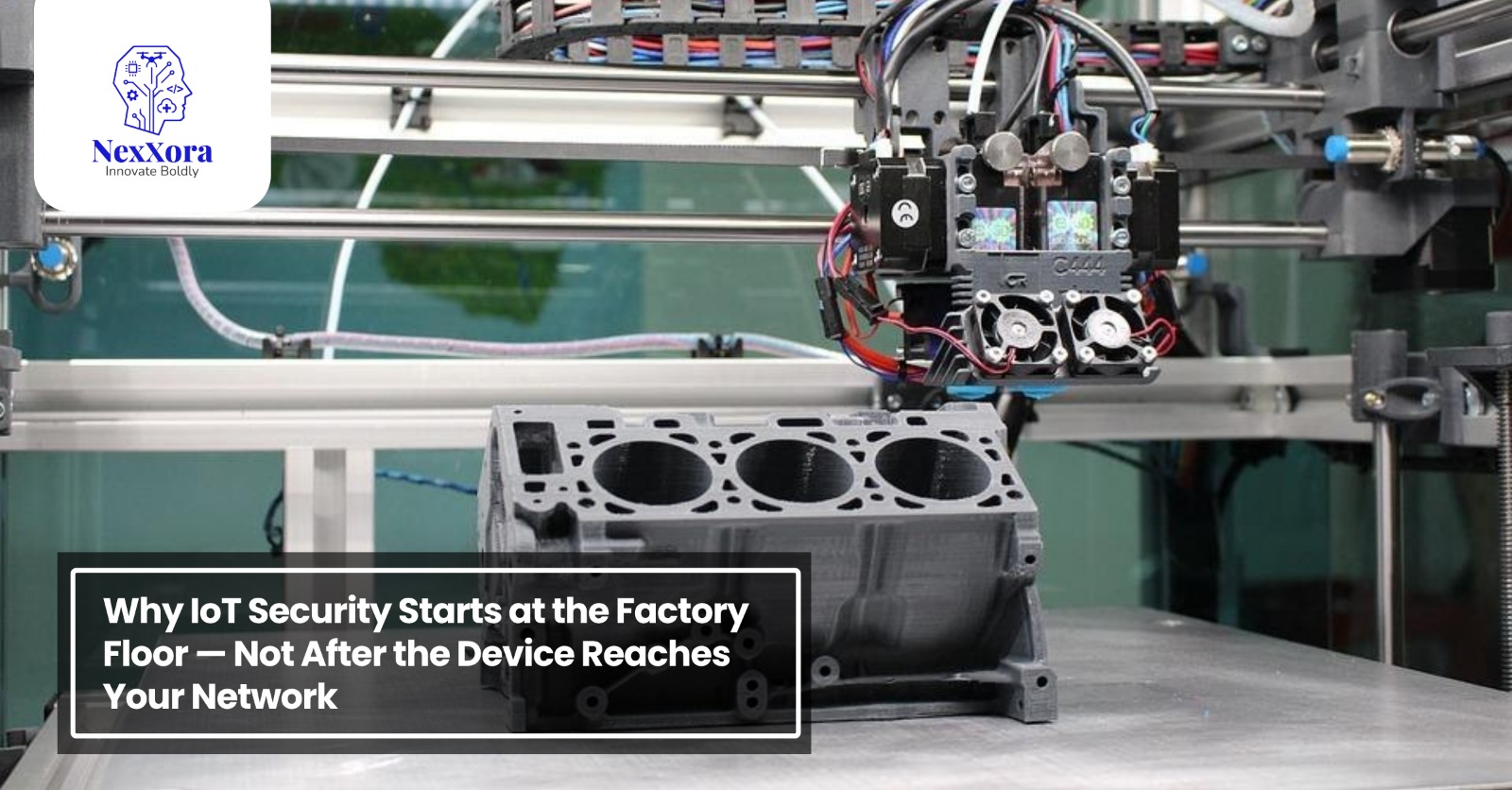
The Internet of Things (IoT) has revolutionized many industries around the world. Smart manufacturing, intelligent healthcare systems, connected transportation solutions, and even industrial automation all rely on IoTs in their everyday operations. While connectivity comes with great benefits, it also brings a lot of challenges related to cybersecurity.
Many companies tend to think that IoT security comes into play only when the devices get connected to an enterprise network. However, security measures should be put in place long before that happens — on the factory floor where IoT devices get manufactured and assembled.
If there is no secure engineering of IoT devices’ hardware, firmware validation, adequate manufacturing processes, and safe supply chain management, even the most sophisticated network-based security systems will not work properly.
At Nexxora Inc and Nexxora Technology, secure engineering solutions are implemented throughout the product development process, allowing companies to create strong, scalable, and secure IoT ecosystems.
This article discusses the importance of secure manufacturing of IoT devices.
- The Need for IoT Security
- Why Traditional Cybersecurity Measures Are Ineffective
- IoT Security Starts on the Factory Floor
- Industries Most at Risk from IoT Cyber Threats
- Regulatory Compliance and IoT Security Standards
- Impacts of AI and Edge Computing on IoT Security
- Why Organizations Should Partner with Secure Engineering Experts
- How Nexxora Enables Secure IoT Innovation
- The Future of IoT Security
- Conclusion
- FAQs
The Need for IoT Security
Today, there are numerous examples of how IoT technology can improve the efficiency of business operations.
They include smart sensors, industrial control systems, connected vehicles, medical devices, smart home appliances, energy management systems, wearable devices, and agricultural monitoring systems.
These devices collect, process, and share sensitive information with other applications constantly.
However, most IoT devices have poorly designed security frameworks that make them prime targets for cybercriminals.
Security Threats in IoT Infrastructure
- Unauthorised access to IoT devices
- IoT malware infection
- Information leakage
- Tampering with the device firmware
- Botnets
- Remote exploits
- Hijacking IoT devices
- Supply chain attacks
In light of the rising number of connected devices, ensuring IoT security has become one of the key priorities for companies around the world.
Why Traditional Cybersecurity Measures Are Ineffective
Many businesses rely extensively on:
- Firewalls
- Antivirus software
- Network security
- Endpoint detection and response systems
- Cloud security services
While these solutions play an integral role in cybersecurity, they usually fail to address the issue of the device itself.
If a company deploys a vulnerable IoT appliance with malicious firmware, all network defenses become redundant.
Example
An infected smart sensor can:
- Expose sensitive data
- Gain unauthorized access to corporate networks
- Enable ransomware attacks
- Install malware on other systems
Therefore, securing IoT devices should be implemented at the development stage.
IoT Security Starts on the Factory Floor
This is where IoT devices get made, programmed, tested, and ready to be deployed.
All steps of production entail risks when security measures are not taken seriously.
- Critical Production Security Points
- Hardware integrity
- Firmware authenticity
- Provisioning
- Supply chain integrity
- Component validation
- Production access control
- Device identification
Proactive IoT security protects devices from vulnerabilities prior to customer distribution.
- Hardware Security and Design
Hardware underpins any IoT device.
Poor hardware design leaves a device susceptible to vulnerabilities that are impossible to eliminate by software alone.
- Secure Hardware Design Features
- Trusted Platform Module (TPM)
- Root of trust
- Secure boot process
- Tamper-proof designs
- Encrypted data storage
- Protection against physical attacks
A safe hardware infrastructure ensures that devices can only run authentic firmware and legitimate software.
Why It Matters
Malicious actors typically look to exploit hardware interfaces such as:
- JTAG port
- Universal asynchronous receiver-transmitter (UART) interface
- Debugging interfaces
- Memory chips
Any unsecured hardware interfaces make IoT devices vulnerable during the manufacturing phase.
- Secure Firmware
Firmware is responsible for the primary processes of IoT devices.
Tampered firmware puts the entire device into the hands of a malicious attacker.
- Secure Firmware Management Includes
- Digitally signing firmware
- Validation upon boot
- Encryption of updates
- Checking versions
- Runtime security checks
Manufacturing requires firmware validation before installation onto devices.
- Insecure Firmware Consequences
- Malware injections
- Attacker access
- Intercepting data transfers
- Persistent malware infection
Secure firmware management is essential for effective IoT security.
- Security in the Supply Chain
In current IoT manufacturing, products utilize international supply chains that involve several suppliers and vendors.
Any components used in the production must be validated.
- Security Threats in the Supply Chain
- Counterfeit hardware
- Malicious chips
- Compromised software libraries
- Unauthorized hardware modification
- Backdoors
One rogue component could jeopardize the integrity of many IoT devices.
- Protective Strategies in the Supply Chain
- Vendor validation
- Component tracing
- Sourcing security
- Hardware verification
- Secure logistics management
Securing the supply chain ensures protection against threats from the very beginning.
- Secure Device Provisioning
Provisioning involves configuring devices before release.
During this phase, devices receive:
- Identification settings
- Certificates
- Encryption keys
- Authentication credentials
Incorrectly configured devices are immediately vulnerable to hacking.
- Recommendations for Secure Provisioning
- Unique device IDs
- Hardware-based keys
- Zero-touch provisioning
- Credential injection
- Encryption
This strategy ensures all IoT devices are provisioned with secure credentials.
- Manufacturing Facility Access Control
Devices are vulnerable to hackers while still under production.
Manufacturers must maintain strict operational security standards.
- Strategies for Factory Floor Access Control
- Role-based access controls
- Multi-factor authentication
- Surveillance systems
- Production network security
- Background checks
- Firmware access control
Human error and insider threats remain major IoT security concerns.
- Secure Testing and Quality Assurance
Testing plays a vital role in exposing flaws before deployment.
An IoT device should undergo:
- Penetration testing
- Vulnerability assessment
- Firmware testing
- Security communication testing
- Security hardware testing
- Common Testing Areas
- Wireless standards
- API security
- Encryption
- Authentication
- Resilience testing
A proper QA procedure reduces the chances of security breaches during deployment.
- Device Identity and Authentication
Every IoT device should have an authenticated and unique device identity.
The absence of authentication allows unauthorized devices access to the network.
- Secure Device Authentication
- Digital certificates
- PKI infrastructure
- Key management
- Hardware authentication
Proper device identity management improves the entire IoT security infrastructure.
- Secure Communication Protocols
IoT devices constantly communicate with other devices, the cloud, gateways, and applications.
Unsecure communication reveals critical information.
- Secure Communication Protocols
- TLS/SSL
- VPN tunneling
- Secure MQTT
- HTTPS APIs
- Encrypted wireless communication
Ensuring secure communication prevents cybersecurity attacks.
- Secure Over-the-Air (OTA) Updates
Over-the-air updates play a key role in securing IoT devices.
An insecure OTA mechanism allows the distribution of malicious firmware updates.
- Secure OTA Procedure
- Authenticated OTA
- Verify OTA updates
- Rollback protection
- OTA update encryption
OTA security helps maintain device integrity long after deployment.
- Lifecycle Security Management
IoT security cannot be stopped once the products leave the factory.
Devices will need to be constantly monitored and maintained for their entire operating lifetime.
- Lifecycle Security Requires
- Patch management
- Threat monitoring
- Vulnerability mitigation
- Security analysis
- Disposal planning
Companies should implement a comprehensive security policy for their connected devices.
Industries Most at Risk from IoT Cyber Threats
Healthcare
Insecure medical equipment could harm patients.
Manufacturing
Attacks on industrial IoT systems could impact production processes.
Automotive
There are growing threats to connected cars’ cybersecurity.
Smart Cities
Infrastructure needs to be securely protected.
Energy and Utilities
Infrastructure is a key target for cyberattacks.
Consequences of Inadequate IoT Security
Badly secured IoT devices may cause:
- Financial loss
- Operational disruption
- Government sanctions
- Loss of reputation
- Data theft
- Damage to customer relationships
Some cases have proven that insecure IoT devices can lead to worldwide cybersecurity issues.
Regulatory Compliance and IoT Security Standards
Governments and regulatory bodies have started demanding enhanced IoT security standards.
- Significant Security Standards
- ISO 27001
- NIST IoT Framework
- IEC 62443
- GDPR
- HIPAA
It is necessary to design products that meet the growing compliance requirements.
Impacts of AI and Edge Computing on IoT Security
Advancing technologies bring new challenges and opportunities.
IoT Devices with AI Capabilities
AI solutions perform extensive processing on confidential information locally and remotely.
Edge Computing Considerations
Edge solutions necessitate decentralization of the security approach.
Higher Attack Surface
The larger the number of connected devices, the higher the vulnerability to threats.
A future-proofed IoT security framework should be adapted to these technologies.
Key Strategies for Crafting Secure IoT Devices
Organizations must implement a security-driven design process.
- Recommended Security Best Practices
- Ensure security in hardware design
- Enable secure communications
- Provide secure boot capabilities
- Demand robust authentication methods
- Ensure secure firmware updates
- Perform penetration testing
- Continuously monitor device behavior
- Secure manufacturing environments
- Control supply chains
The security process needs to be an integral aspect throughout the product life cycle.
Why Organizations Should Partner with Secure Engineering Experts
Creating a secure IoT system demands knowledge and skills in:
- Embedded hardware
- Firmware engineering
- Secure manufacturing
- Cloud computing
- Cybersecurity architecture
- Compliance management
Working with experienced engineering teams reduces development risks and accelerates secure innovation.
How Nexxora Enables Secure IoT Innovation
Nexxora Inc and Nexxora Technology provide services to assist businesses in designing and implementing IoT solutions using secure connected systems and advanced cybersecurity measures.
Their specialties include:
- Embedded hardware security
- Development of secure firmware
- IoT system architecture
- PCB design and validation
- Industrial automation
- Secured manufacturing processes
- Device lifecycle management
- Engineering for compliance
With an integrated approach to security throughout the process of creating new devices, companies can ensure that their IoT solutions are ready for any situation.
The Future of IoT Security
Some key directions that will influence the future of IoT security include:
- Zero-trust architectures for IoT devices
- Artificial intelligence-based threats
- Encryption at the hardware level
- Monitoring for autonomous security threats
- Secure edge computing
- Quantum-safe encryption algorithms
Companies that invest in proactive measures today will reap the benefits of being well-prepared for tomorrow.
Conclusion
IoT security is an essential part of the modern world.
Many security risks associated with the use of IoT devices exist long before such a product is delivered to its final destination.
In order to achieve true IoT security, companies need to pay attention to the process of creating and manufacturing IoT devices.
With assistance from experts at Nexxora Inc and Nexxora Technology, you can create secure and scalable IoT solutions that stand the test of time.
FAQs
1. What is IoT security?
IoT security refers to protecting connected devices, networks, firmware, data, and communication systems from cyber threats and unauthorized access.
2. Why should IoT security start at the factory floor?
Security vulnerabilities often originate during device design, manufacturing, provisioning, and firmware installation. Early protection reduces long-term risks.
3. What are the biggest IoT security threats?
Common threats include:
- Malware attacks
- Device hijacking
- Data breaches
- Firmware tampering
- Supply chain attacks
- Unauthorized access
4. What is secure boot in IoT devices?
Secure boot ensures devices only run authenticated and trusted firmware during startup.
5. Why is firmware security important?
Firmware controls device operations. Compromised firmware can give attackers full control of IoT devices.
6. How does supply chain security affect IoT devices?
Compromised suppliers or counterfeit components can introduce hidden vulnerabilities into devices during manufacturing.
7. What role does encryption play in IoT security?
Encryption protects sensitive data during storage and transmission, preventing unauthorized access.
8. How can Nexxora help with secure IoT development?
Nexxora Inc. and Nexxora Technology provide secure hardware engineering, firmware development, IoT architecture design, manufacturing support, and cybersecurity-focused product development solutions.







No comment