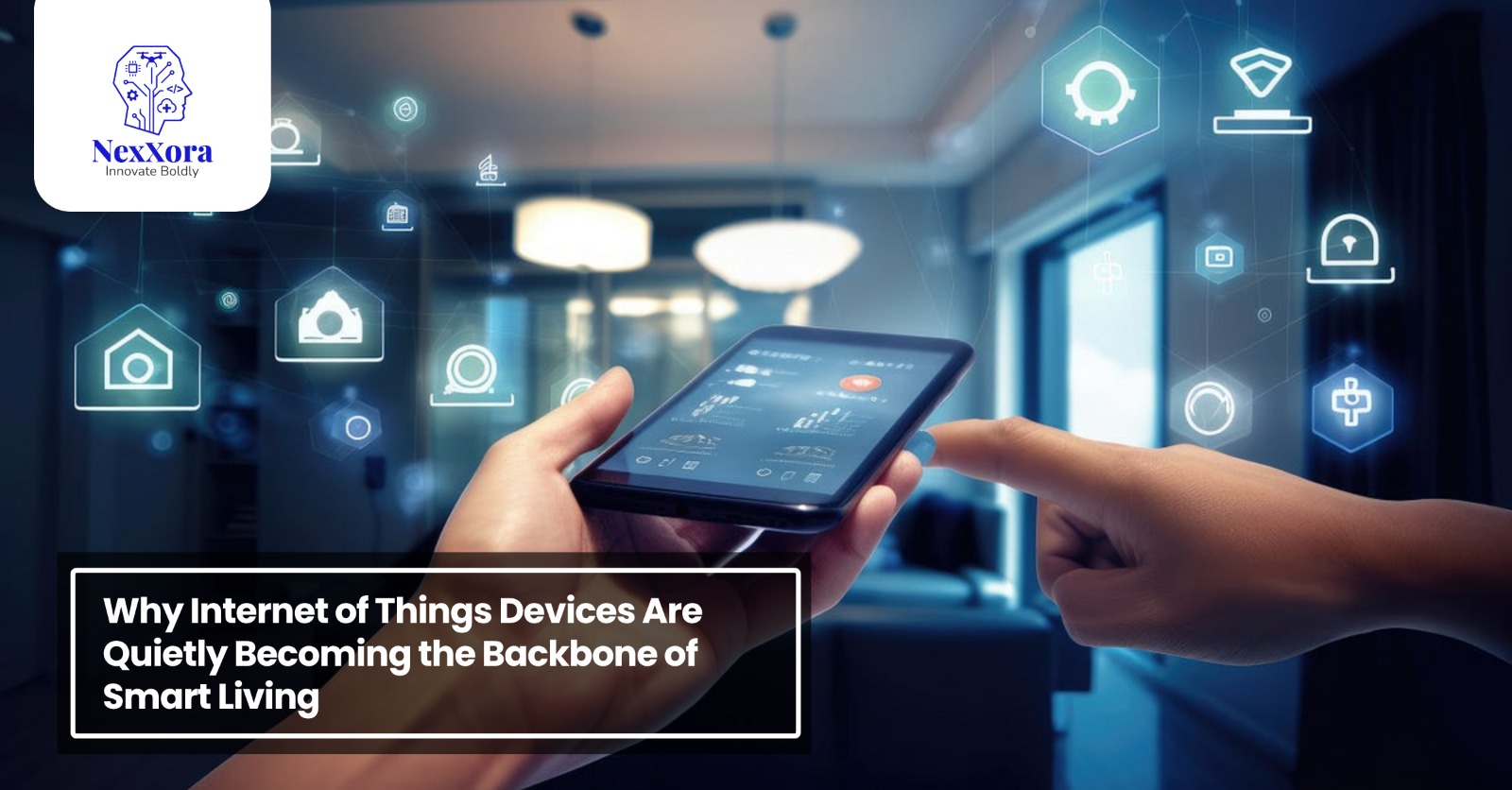
The world becomes smarter day after day, and it all happens thanks to Internet of Things devices. Smart homes, wearable devices for tracking personal health, intelligent factories, and transport networks – it’s all about IoT. What looked sci-fi just a few years ago has become an indispensable part of people’s lives, making them more convenient, safe, efficient, and automated without them even noticing how IoT devices are working.
Billions of interconnected devices gather and share real-time data everywhere: in houses, enterprises, medical care, and urban infrastructure. It is because of the rapid development of artificial intelligence, cloud computing, 5G networks, and edge computing that IoT has become so widely used throughout the world. Specialists agree that IoT devices will keep developing and become one of the most important digital infrastructures in the near future.
For consumers and businesses, IoT devices are not just innovations; they become the cornerstone of modern lifestyles and business operations.
This seamless automation is why IoT is quietly becoming the backbone of smart living.
- Why the Importance of Internet of Things Devices Cannot Be Overlooked Now
- Internet of Things Solutions in Smart Homes
- Internet of Things Drives Innovation in the Healthcare Sector
- IoT Devices Are Critical for Building Smart Cities
- How IoT Helps Companies Transform Their Businesses
- The Role of AI and Edge Computing in IoT
- Future Trends in IoT Devices
- Why Companies Need to Adopt IoT Devices Now
- Conclusion
- FAQs
Why the Importance of Internet of Things Devices Cannot Be Overlooked Now
- Real-Time Data Gathering
Through Internet of Things devices, continuous collection of data from the environment is possible.
For instance:
- Smart thermostats collect data concerning temperature and occupation
- Wearable devices capture data on heart rate and activities
- Sensors installed in industries detect any anomalies with the machines
- Intelligent traffic control systems collect data regarding the vehicles
Real-time data collection plays a significant role in decision-making and automation processes.
- Increased Automation Improves Efficiency
Among the strengths associated with Internet of Things devices, automation stands out.
Users will be relieved of having to handle each task manually since Internet of Things technology will handle routine chores such as:
- Controlling light switches
- Energy consumption management
- Remote door locking systems
- Scheduling appliance operations
- Inventory tracking and alerts
This automation saves time, reduces human error, and improves overall efficiency.
- Increased Energy Efficiency
In smart living, the use of sustainable technologies is essential. IoT devices allow for decreasing unnecessary energy consumption via smart control systems.
Smart energy solutions may:
- Minimize electricity consumption during low occupancy periods
- Improve HVAC system performance
- Monitor water usage
- Track energy leaks
- Control the integration of renewable energy sources
Numerous studies and industry reviews confirm the high efficiency and low cost of AI-based IoT systems.
With increasing emphasis on sustainability globally, energy control based on IoT systems is likely to develop rapidly.
Internet of Things Solutions in Smart Homes
A prominent application area for IoT solutions is smart homes.
Smart Home Security Solutions
Remote camera monitoring, motion sensors, and smart locks boost security levels at home.
These options allow users to:
- Watch live video feeds
- Remotely lock/unlock doors
- Get alerts on intrusion attempts
- Track package deliveries
- Smart Home Appliances
Today’s appliances are becoming increasingly intelligent and interconnected.
These include:
- Fridges that monitor inventory
- Washing machines that can be controlled via a mobile app
- Voice-controlled smart assistants
- Lighting systems
Smart Climate Control
Smart thermostats learn from users’ habits and climate conditions to provide automatic temperature regulation inside buildings.
It results in:
- Increased comfort
- Better energy efficiency
- Environmental friendliness
The conversation on Reddit about trends in smart homes reveals that people pay more attention to AI devices, automation reliability, and fast smart connections.
Internet of Things Drives Innovation in the Healthcare Sector
Nowadays, healthcare is among the fields that have been transformed by the use of IoT devices.
Wearable Health Tracking Gadgets
Modern wearables can track:
- Heart rate
- Sleeping habits
- Blood oxygen saturation level
- Physical activity
- Stress patterns
These gadgets help users control their health actively.
Remote Patient Monitoring
Medical devices connected to the internet make it possible for healthcare organizations to monitor patients without face-to-face meetings, enhancing patient experience and minimizing unnecessary trips to hospitals.
Such innovations enable:
- Rapid reaction to emergencies
- Disease prevention
- Cost reduction in healthcare services
- Greater accessibility
IoT-based healthcare systems became especially important as remote care adoption accelerated globally.
IoT Devices Are Critical for Building Smart Cities
Today’s smart cities depend on IoT infrastructure to enhance their management and sustainability.
Traffic Management
IoT technology is employed to track traffic in real time and help cities improve traffic signal timings and reduce congestion.
Trash Collection
IoT trash cans alert sanitation workers about trash collection, making this process more efficient and economical.
Smart Lighting
Thanks to IoT-powered smart street lighting, the illumination levels depend on movement and weather. This solution helps cities save money on electricity.
Experts refer to IoT not as a groundbreaking technology but as a crucial infrastructure for today’s cities.
How IoT Helps Companies Transform Their Businesses
There have been many cases where IIoT solutions have helped businesses become more efficient and productive.
Predictive maintenance
Sensors collect information about how machinery operates and identify issues that could cause breakdowns.
With predictive maintenance, businesses will be able to:
- Reduce the risks of equipment malfunctions
- Save money on repairs
- Improve productivity
- Increase the life of the equipment
- Smart Manufacturing
Companies apply IoT solutions to make their manufacturing processes automated and optimized.
Industry research indicates that predictive maintenance based on IoT and AI can dramatically minimize unexpected equipment downtime.
Supply chain visibility
Businesses can increase transparency and traceability thanks to IoT solutions in:
- Inventory
- Shipments
- Condition monitoring
- Equipment health monitoring
This improves operational accuracy and customer satisfaction.
The Role of AI and Edge Computing in IoT
Current Internet of Things gadgets have become intelligent owing to innovations in AI and edge computing.
Artificial Intelligence
AI allows IoT solutions to:
- Detect patterns
- Make predictions
- Automate decisions
- Identify outliers
AI converts the unprocessed information coming from the sensors into intelligent insights.
Edge Computing
With edge computing, processing of the information happens locally, near the device, rather than centrally at the cloud servers.
Advantages of edge computing include:
- Low latency
- Speed of performance
- Higher security
- Minimal network bandwidth use
According to recent industry studies, edge intelligence will be among the major IoT trends in 2026.
Security Issues Associated With Internet of Things Devices
Although IoT gadgets bring many benefits, they also pose some security threats.
- Challenges with IoT Security
- Lack of device authentication
- Privacy issues
- Network vulnerability
- Inconvenient software updates
- Device compatibility
Since there are more connected gadgets than before, IoT security is very important.
IoT implementation should take into consideration such factors as:
- End-to-end encryption
- Authentication
- Secure data handling
Nexxora emphasizes security-focused IoT integration strategies to ensure scalable and protected connected environments.
Future Trends in IoT Devices
There are many trends shaping the future of IoT devices in smart living environments.
5G Network
5G facilitates faster communication among connected IoT devices.
AI Integration
AI integration in IoT will make such ecosystems more independent and predictive.
Digital Twins
Digital twins help replicate the real-world processes in virtual settings.
Smart Mobility
Innovation in mobility and transportation requires extensive use of IoT technology.
Environmental Monitoring
IoT can help monitor the environment and conserve natural resources.
The IoT ecosystem is expected to transform into a highly intelligent network of devices that can self-optimize and make autonomous decisions.
Why Companies Need to Adopt IoT Devices Now
Businesses failing to adopt IoT are likely to lose to their counterparts who have leveraged intelligent automation and connected IoT ecosystems.
The benefits of IoT include the following:
- Efficiency
- Better customer experience
- More effective decision-making
- Lower cost of operations
- More income
- Automation scalability
It is becoming increasingly clear that IoT is no longer about adopting new technology, but undergoing a radical transformation.
Organizations such as Nexxora Inc and Nexxora Technologies facilitate such transformation by offering businesses intelligent IoT solutions.
Conclusion
IoT devices are silently redefining the very base of our existence. In our homes, workplaces, healthcare centers, manufacturing units, and smart cities, Internet of Things (IoT) technology has opened up new possibilities through automation and connectivity in almost all spheres.
It is the ecosystem built around these devices that makes them so revolutionary in nature. AI, edge computing, cloud infrastructure, and analytics have together revolutionized the lives of individuals and organizations alike.
With technology moving from strength to strength, IoT devices are only set to play an increasingly important role in our day-to-day lives.
The future of smart living is already here—and IoT is at the center of it.
FAQs
1. What are Internet of Things devices?
Internet of Things devices are physical objects connected to the internet that collect, share, and process data using sensors, software, and communication technologies.
2. How do Internet of Things devices work?
IoT devices gather data from their environment, transmit it through networks, and use software platforms or AI systems to analyze information and automate actions.
3. What are examples of Internet of Things devices?
Examples include smart thermostats, fitness trackers, connected security cameras, wearable medical devices, industrial sensors, and smart home appliances.
4. Why are Internet of Things devices important?
They improve automation, efficiency, convenience, security, and decision-making across homes, businesses, healthcare, manufacturing, and smart cities.
5. What industries use Internet of Things devices?
Industries using IoT include healthcare, manufacturing, logistics, agriculture, retail, transportation, energy, and smart city infrastructure.
6. What are the benefits of Internet of Things devices?
Major benefits include:
- Real-time monitoring
- Automation
- Energy efficiency
- Predictive maintenance
- Improved customer experiences
- Cost reduction
7. Are Internet of Things devices secure?
IoT security depends on proper implementation. Businesses should use encryption, authentication, secure networks, and regular software updates to protect connected devices.
8. What is the future of Internet of Things devices?
The future includes AI-powered automation, 5G connectivity, edge computing, smart cities, autonomous systems, and sustainable smart living environments.



No comment