
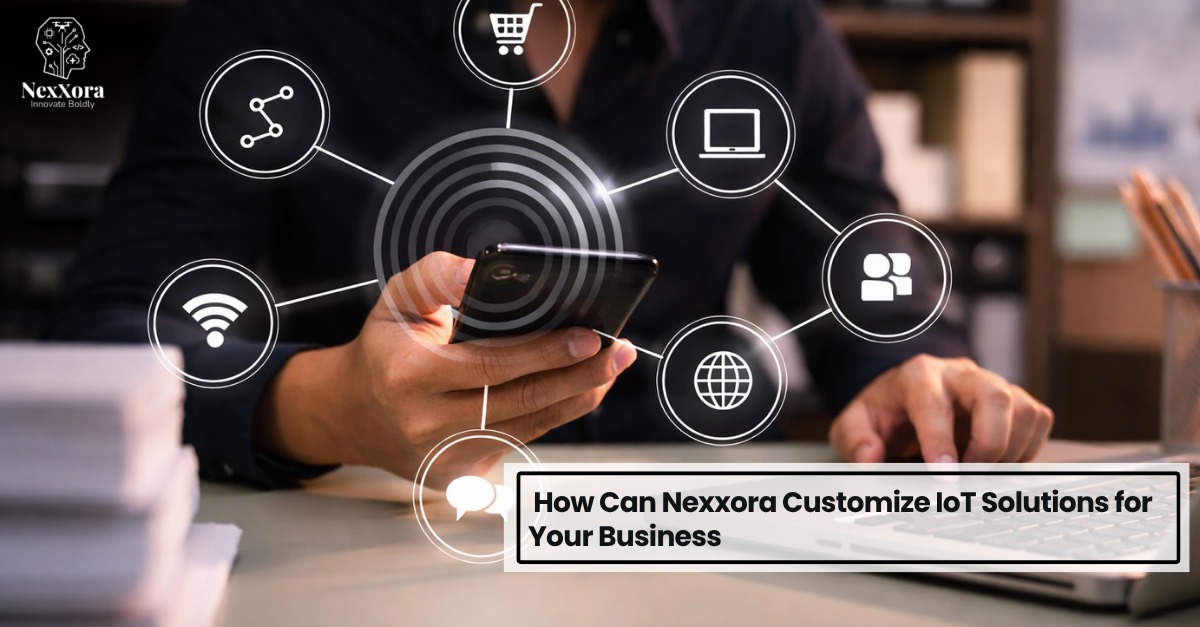
In today’s hyper-connected digital landscape, IoT solutions — short for Internet of Things solutions — refer to the integrated ecosystem of smart devices, sensors, communication protocols, and cloud-based platforms that allow physical objects to collect, transmit, and act on data in real time. Through advanced IoT integration services, these solutions seamlessly connect devices, platforms, and data systems, bridging the gap between the physical and digital worlds. This enables machines, infrastructure, and entire environments to become intelligent, connected, and capable of making data-driven decisions.
1. Why Businesses Are Adopting IoT Technologies
Enterprises across various industries are leveraging IoT solutions to improve operational efficiency, minimize downtime, and provide data-driven insights. Whether it is predictive maintenance for industries or asset tracking for logistics operations, IoT solutions provide a tangible return on investment by automating processes and facilitating quick and efficient decision-making. According to industry studies, the global IoT market is predicted to reach over $1 trillion by 2030, highlighting the importance of embracing IoT solutions at the earliest.
2. The Growing Need for Customized IoT Solutions
Adapting IoT Solutions to Business Requirements
No two businesses are alike in their operational workflows. A generic approach may not be effective in addressing their unique requirements. Customized IoT solutions provide organizations with the ability to customize every aspect of their technology stack, from edge device firmware to cloud-based analytics solutions, to their own specifications to ensure seamless interoperability and maximum benefit from every data point.
Improving Efficiency Through Smart Connectivity
The intelligent connectivity facilitated by communication protocols like MQTT, Zigbee, LoRaWAN, and 5G NR is at the core of all modern IoT systems. By implementing communication networks with low latency and high bandwidth, businesses can achieve real-time monitoring, automated alerts, and remote actuation while minimizing human intervention in these systems, thereby achieving lean operations with lower total cost of ownership (TCO).

3. Key Components of Effective IoT Solutions
Connected Devices and Sensors
At the physical layer of any well-designed IoT architecture, we find connected devices and sensors, which are endpoints for data collection to monitor temperature, humidity, pressure, vibration, GPS coordinates, and so forth. These microcontrollers, computer boards, and IoT hardware modules are all pre-programmed with firmware to collect environmental data and send it up the network stack using various wired or wireless protocols.
Cloud Platforms and Data Processing
At the physical layer of any well-designed IoT architecture, we find connected devices and sensors, which are endpoints for data collection to monitor temperature, humidity, pressure, vibration, GPS coordinates, and so forth. These microcontrollers, computer boards, and IoT hardware modules are all pre-programmed with firmware to collect environmental data and send it up the network stack using various wired or wireless protocols.
Real-Time Monitoring and Analytics
However, effective IoT solutions are not possible without real-time monitoring and analytics. A dashboard implemented using technologies such as Grafana, Power BI, and React-based tools allows stakeholders to view real-time KPIs and receive alerts for anomalies in the data. Sophisticated systems can be implemented using machine learning (ML) and digital twin technologies to predict the failure of the devices.
4. Steps Involved in Developing Customized IoT Solutions
Identifying Business Needs and Use Cases
Every IoT project begins with a thorough discovery process, where business analysts and IoT architects work with stakeholders to identify the pain points, define the KPIs, and identify the high-value use cases, whether they are related to optimizing the usage of energy, the supply chain, or patient monitoring, etc.
Designing the IoT Architecture
Architecture design entails the complete technical blueprint for IoT solutions, including topology for devices, communication protocol choice, data ingestion mechanisms, data storage mechanisms (time-series databases such as InfluxDB or TimescaleDB), as well as security mechanisms. A well-designed architecture meets both functional and non-functional requirements, including latency, fault tolerance, and compliance with legislation such as GDPR, HIPAA, or ISO 27001.
Device Integration and Data Management
In terms of device integration, this entails provisioning and registration of physical devices, configuration of firmware over-the-air (FOTA) update infrastructure, and establishment of secure TLS/SSL handshakes for encrypted data transfer. In terms of data management, ETL (extract, transform, load) pipelines normalize diverse data formats into a unified format for efficient analysis.
Testing, Deployment, and Optimization
Before deployment, IoT solutions are tested rigorously, ranging from unit tests, integration tests, load tests, and penetration tests. Once deployed, continuous monitoring using observability stacks such as Prometheus, Loki, and Jaeger ensures that the performance benchmarks are met. Continuous optimization cycles are used to optimize device configurations, API call efficiency, and ML model accuracy in real-world scenarios.
5. Industries Benefiting from IoT Solutions
Manufacturing and Industrial Automation
In the manufacturing industry, IoT technologies are used for implementing the capabilities of Industry 4.0, such as condition-based maintenance, OEE (Overall Equipment Effectiveness) monitoring, and autonomous control using robots. Sensors are placed on CNC machines, conveyor belts, and HVAC systems and communicate the data to the SCADA (Supervisory Control and Data Acquisition) system.
Healthcare and Smart Medical Devices
The healthcare industry utilizes IoT technology in connecting biosensors, infusion pumps, imaging devices, and EHR (Electronic Health Records) systems through a healthcare continuum. Remote patient monitoring (RPM) systems transmit vital signs such as heart rate, SpO2, blood glucose levels directly from patient monitoring devices to healthcare systems for proactive interventions and reducing hospital readmission rates.
Smart Cities and Infrastructure
City governments utilize IoT technology in the form of smart street lighting, waste management systems, water monitoring systems, and public transportation systems. These IoT solutions can be integrated with GIS and AI-based urban analytics solutions to help city planners optimize resource allocation and minimize the environmental impact of city operations.
6. Challenges in Implementing IoT Solutions
Data Security and Privacy
However, cybersecurity is still at the top of the list of issues to be addressed in any IoT implementation. The distributed nature of IoT systems greatly increases the attack surface of these systems, making them susceptible to man-in-the-middle attacks, firmware attacks, and DDoS attacks. Good security practices should include zero trust, end-to-end encryption, device identity, and X.509 certificates, as well as regular vulnerability assessments.
System Integration with Existing Infrastructure
The integration of new IoT solutions with existing brownfield systems, which include legacy PLC systems, ERP systems (SAP, Oracle), and existing communication buses, poses significant middleware integration issues. API gateways, protocol translators (OPC-UA bridges), and event-driven integration platforms (Apache Kafka, MuleSoft) are some of the tools used to enable bi-directional data flow without impacting existing operations.
Scalability and Maintenance
As the device fleet increases in numbers, ranging from hundreds to millions, IoT systems are required to scale horizontally without compromising performance. The auto-scaling of cloud resources, federated edge computing, and auto-management of fleet are some of the technologies that allow organizations to deliver service level agreements even during peak usage scenarios. In addition, proactive management of the device lifecycle, such as remote diagnostics, patching, and refresh cycles, are critical to ensure long-term sustainability.
Frequently Asked Questions (FAQs)
Q1. What is the difference between IoT solutions and traditional automation?
Unlike hard-wired automation, IoT solutions use internet-connected sensors and cloud analytics to enable dynamic, self-adapting, remotely managed automation.
Q2. How long does it take to implement a customized IoT solution?
Small deployments take 6–12 weeks; enterprise-scale IoT solutions with thousands of endpoints typically require 3–9 months with phased rollouts.
Q3. What security standards should IoT solutions comply with?
IoT solutions should follow NIST IoT Cybersecurity Framework, IEC 62443, HIPAA, and GDPR, with TLS 1.3 encryption and certificate-based device authentication as baseline requirements.
Q4. Why should I choose Nexxora for my business’s IoT solutions?
Nexxora tailors every IoT solution to your exact workflows, infrastructure, and compliance needs — ensuring faster time-to-value and a scalable architecture built for growth.
Q5. What industries does Nexxora serve with its IoT integration services?
Nexxora delivers IoT solutions across manufacturing, healthcare, logistics, smart cities, retail, and energy sectors.
Q6. How does Nexxora ensure the security and scalability of its IoT solutions?
Nexxora embeds zero-trust principles, end-to-end encryption, and cloud-native auto-scaling into every IoT solution for enterprise-grade reliability.
7. Conclusion
Customized IoT solutions are no longer optional — they are a strategic imperative for businesses aiming to stay competitive. Nexxora‘s end-to-end IoT integration services deliver secure, scalable, and tailored connected systems that drive real business outcomes. From designing IoT infrastructure to deploying and integrating smart devices with existing enterprise systems, Nexxora ensures seamless connectivity and real-time data intelligence for modern businesses





No comment