
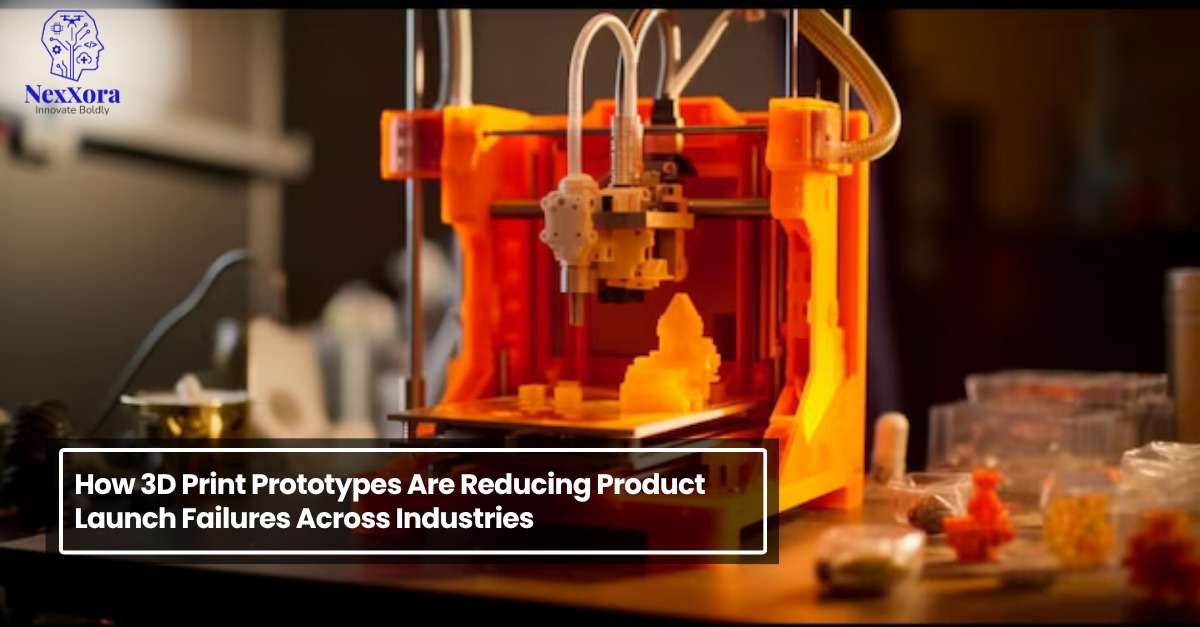
There is an earthquake happening within the sphere of global product development, and 3D Prototype Printing Services in India are playing a key role in accelerating this transformation. The cornerstone of the current revolution is the creation of a 3D print prototype—a physical layer-by-layer representation of a digital design file, created via Additive Manufacturing (AM) technology. While subtractive manufacturing is a process where material is taken away from a solid piece, Additive Manufacturing creates parts utilizing technologies such as FDM, SLA, SLS, and MJF among others. Depending on the selected technology, various compromises exist in terms of dimensional accuracy, surface roughness expressed in Ra µm units, materials, and production speed. As per today’s estimate, by 2025, the worldwide 3D printing market will be worth $20+ billion, with prototyping services contributing significantly to that figure. Teams that adopt 3D print prototypes early in their product lifecycle—often leveraging reliable 3D Prototype Printing Services in India—have a much greater chance of avoiding costly launch failures.
- Why Product Launch Failures Still Happen Across Industries
- How 3D Print Prototypes Improve Early-Stage Validation
- Faster Iteration Cycles and Reduced Time-to-Market
- Enhancing Design Accuracy Through Rapid Prototyping
- Cost Reduction Benefits Before Mass Production
- Real-World Applications Across Key Industries
- Identifying Design Flaws Before Final Production
- Collaboration Between Engineering and Product Teams
- Scaling from Prototype to Full Production Efficiently
- Challenges and Considerations in Prototype Development
- Future Trends in 3D Printing for Product Innovation
- Frequently Asked Questions (FAQ)
- Conclusion: Reducing Risk and Increasing Product Success
Why Product Launch Failures Still Happen Across Industries
Even with the use of advanced CAD and computer simulation programs, product launch failures still occur frequently. Several studies conducted on product innovation reveal that between 40% to 95% of new products have failed based on industry type. Some of the factors associated with the failure include the following:
- Mismatch between design tolerances and manufacturability not captured through computer simulation
- Performing failure mode and effect analysis (FMEA) at the wrong time of the product development process
- Incompatibilities revealed from ergonomic and human factor considerations through user tests
- Discrepancies between material behaviors and actual performance under different environmental conditions
The key challenge is the disparity between virtual validation and real-life conditions. Computer-aided engineering (CAE), including finite element analysis (FEA) and computational fluid dynamics (CFD), is effective; however, human sensing and fit cannot be simulated using such tools. A 3D print prototype can provide a solution to this problem.
How 3D Print Prototypes Improve Early-Stage Validation
Validation forms the basis of reducing risks in product development engineering. The availability of a prototype created through 3D printing gives designers the ability to initiate DVT and DV much earlier in the timeline of the project. The physical models created through SLA with an ability to produce layers of as low as 25 microns give the designers a chance to validate the geometric complexity, evenness of walls, and snap fit tolerance stacks using actual models. PolyJet printing takes this to another level as the process allows for multi-material prototyping whereby flexible and rigid sections can be made in a single print.
Faster Iteration Cycles and Reduced Time-to-Market
One of the key measurable benefits of 3D-printed prototype is the massive reduction in iteration time required in the design phase. Using the hard tooling technique for injection molding can take anywhere between 6 to 14 weeks for each cycle and cost between $5,000 and $100,000+. Additive manufacturing cuts down iteration time significantly to 24-72 hours per cycle, thus allowing for quick ‘build-test-learn’ iterations, which fit well within Agile methodologies. As of 2024, statistics reveal that the utilization of 3D-printed prototypes enabled organizations to cut down their time-to-market period by 35-50%. Moreover, the removal of hard tooling time during the initial phase of design review greatly impacts project scheduling.
Enhancing Design Accuracy Through Rapid Prototyping
Today’s additive manufacturing devices achieve tolerances within ±0.1 mm to ±0.2 mm for regular FDM printing, and tighter tolerances down to ±0.05 mm are possible for professional SLA or MJF technologies. Such accuracy provides an opportunity to verify GD&T requirements, evaluate datum reference systems, and perform first-article inspection procedures based on CAD nominal models with the help of CMM probing. DFM testing is also improved by having a tangible 3D printed model, as assembly workers can test ergonomic access, torque ranges for fasteners, and disassembly methods, which is not easy in purely virtual settings.
Cost Reduction Benefits Before Mass Production
The financial benefits of making a 3D prototype before launching into full-scale production are clear. Engineering Change Orders (ECOs) incurred during the development of tools or production process are vastly more costly than when these occur while still in the prototype phase. In accordance with the “Rule of Ten,” which is used in manufacturing cost engineering, an error fixed at the prototype phase will cost one-tenth that of if it were discovered during the pilot production phase and one-hundredth of fixing an issue after launch. Some examples of these benefits include:
- Reduced spending on injection mold tooling too early
- Decreased scrap and rework during pilot production
- Less expensive product recall after launch
Real-World Applications Across Key Industries
The utility of the 3D print prototype is not limited to any single vertical. Its application spans industries with very different regulatory, performance, and material demands:
- Automotive Industry: Prototypes of under-the-hood parts, aerodynamic body panels, and bracketry are created using engineering-grade thermoplastic materials like PEEK, Nylon PA12, or glass-reinforced PLA to mimic their thermal stability and rigidity during movement.
- Medical Devices: Custom anatomical models, surgical guides, and medical device enclosures are manufactured from biocompatible materials like MED610 and Dental SG resin, which conform to ISO 10993 biocompatibility standards.
- Consumer Electronics: Prototype housings with complex snaps, electromagnetic interference (EMI) shielding slots, and port designs are tested prior to releasing production tools.
- Industrial Machinery: Manifolds for fluid management, mounting plates for sensors, and tool jigs/fixtures are designed and tested under pressure and temperature cycling.
Identifying Design Flaws Before Final Production
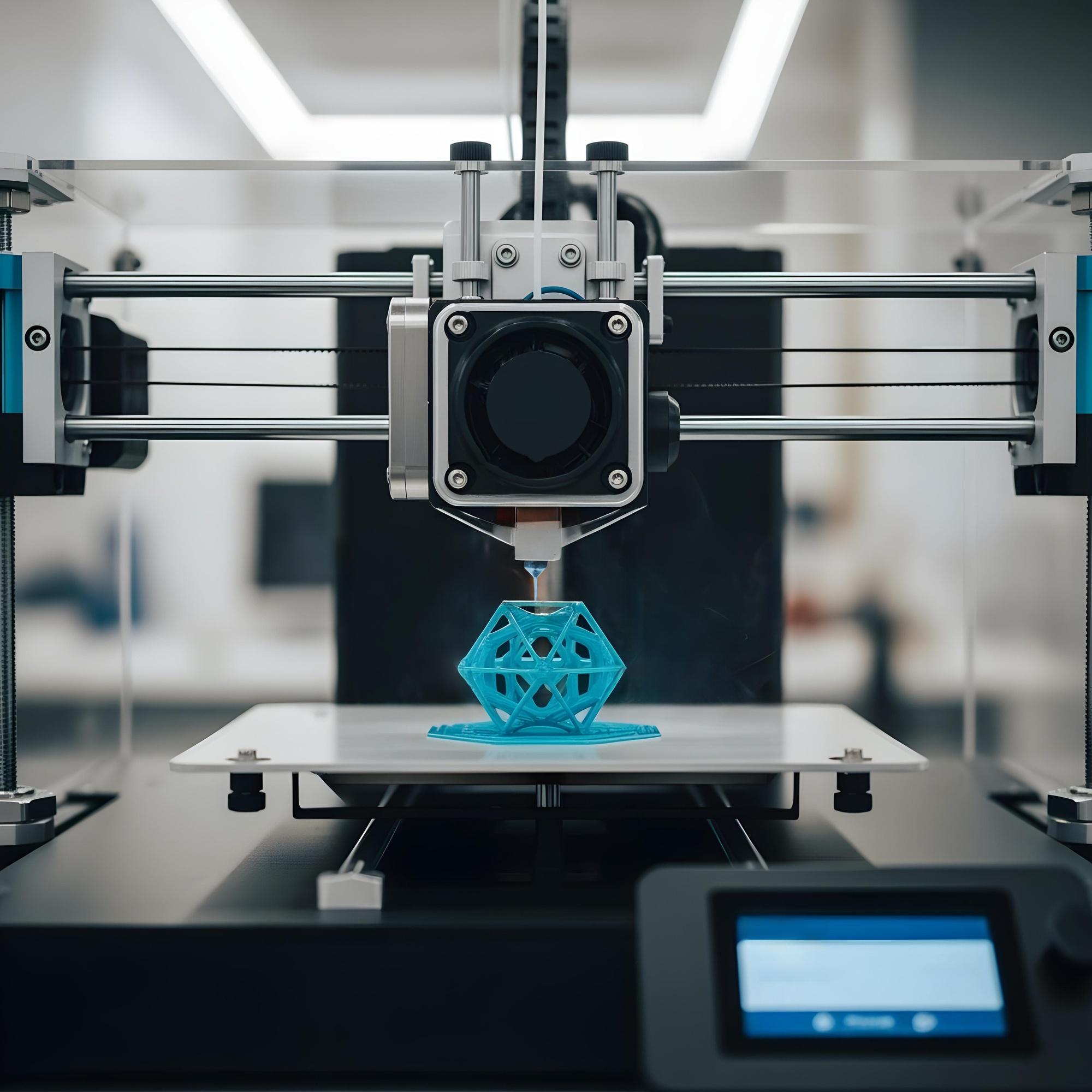
Prototype failures are often hidden from the designer through the use of digital modeling techniques. Some examples of design errors that are usually discovered at the prototype phase include insufficient wall thickness due to weld lines in an injection molded part, a lack of draft angles, which causes difficulty in removing the mold, distortion resulting from heat transfer into thin wall regions, and interference tolerances exceeding specified values. Wearable products, for instance, would benefit from a 3D printed prototype in verifying the IP rating (IP67/IP68) through mechanical verification of the gasket seal geometry prior to cutting precision molds.
Collaboration Between Engineering and Product Teams
Physical prototypes serve as a common language that helps in communicating across disciplines in product development. Even though mechanical engineers can easily comprehend the information presented in a technical drawing, marketing departments, management personnel, and user experience designers have difficulty translating a two-dimensional technical drawing into its three-dimensional version. The creation of a physical prototype bridges this communication barrier by facilitating faster and more efficient design reviews and feedback sessions, as well as more coherent decision-making processes.
Scaling from Prototype to Full Production Efficiently
An optimally designed 3D printing prototype workflow efficiently supports the ramp-up process for mass production. Once the prototype design has been verified, and the inputs from the Design for Manufacturability analysis have been considered along with the material properties, the subsequent tooling, material procurement, and IQ/OQ/PQ processes can be carried out with greater assurance and without many disruptions. Multi-Jet Fusion (MJF) is one such technology that stands out in this context – MJF components possess nearly isotropic mechanical properties; hence, the transition from the prototype to the production component does not require much re-validation of the structural data.
Challenges and Considerations in Prototype Development
While the benefits are substantial, 3D print prototype development is not without technical challenges. Teams must carefully manage:
- Mechanical anisotropy in FDM models (tensile strength in Z direction usually 20-40% weaker than in XY direction)
- Necessity for post-print processing (removal of support material, sanding, chemical polishing, UV curing)
- Constraints on material properties compared to production quality polymers or metals
- Vulnerability of intellectual property to be compromised when using outsourced printing services, demanding stringent NDA and data protection policies
Future Trends in 3D Printing for Product Innovation
The evolution of 3D printed prototype technology continues at an accelerating pace. Some significant trends to watch out for in the coming years, particularly up to 2025, include metal binder jetting for near-net-shape prototyping of steels and titaniums free from any sintering distortions, CFR printing for structurally reinforced composite materials as substitutes for machined carbon fiber structures, and artificial intelligence-enabled topology optimization for creating organic shapes that cannot be fabricated through conventional machining techniques. Digital twin technology, which incorporates data from the physical prototype into its computer-aided design simulation counterpart, is emerging as another promising trend.
Frequently Asked Questions (FAQ)
Q1. What is a 3D print prototype and how is it created?
A 3D print prototype is a physical model built layer-by-layer from a digital CAD file using additive manufacturing processes such as FDM, SLA, or MJF. It allows engineers to validate design geometry and functional performance before committing to production tooling.
Q2. Which 3D printing technology is best for functional prototypes?
Multi-Jet Fusion (MJF) and SLS are widely preferred for functional prototypes due to their near-isotropic mechanical properties and high dimensional accuracy. SLA is ideal for visual and form-fit verification prototypes requiring fine surface finish.
Q3. How much does 3D prototype printing typically cost compared to traditional tooling?
A single 3D print prototype typically costs a fraction of hard injection-mold tooling, which can range from $5,000 to $100,000+. Prototyping costs are volume-independent and can often be completed within 24–72 hours, offering a significant economic advantage in early development stages.
Q4. What 3D prototype printing technologies does Nexxora offer in India?
Nexxora provides FDM, SLA, PolyJet Fusion, Multi-Jet Fusion, and vacuum casting services, covering a broad spectrum of material and accuracy requirements for industries including automotive, medical, wearable, and industrial electronics.
Q5. Can Nexxora support prototyping for regulated industries like medical devices?
Yes. Nexxora’s engineering team supports prototyping for medical and automotive applications, including patient-specific anatomical models and functional component validation, with attention to material compliance and precision requirements critical in regulated sectors.
Q6. How quickly can Nexxora deliver a 3D print prototype for an industrial project?
Nexxora offers rapid turnaround on 3D print prototype projects, with delivery timelines driven by part complexity and chosen technology. Their national-level service infrastructure in India enables fast dispatch and supports iterative design cycles without extended lead times.
Conclusion: Reducing Risk and Increasing Product Success
It is evident from the statistics that organizations adopting 3D printed prototypes during the development process benefit by experiencing lesser failures at launch, reduced engineering change costs, and shorter time-to-market duration. Be it FDM concept prototypes, SLA validation prototypes, or functional MJF prototypes, additive manufacturing has emerged as an important risk management tool used in the development process today.
If you aim to enhance your prototyping process, we at Nexxora Technology can help you out. At Nexxora Technology, we have all types of 3D printing services under our belt, ranging from FDM 3D prototypes, SLA, PolyJet, MJF, and vacuum casting techniques. Not only are we well-versed in the process, but we also have the advantage of being adept in developing prototypes in sectors like automobiles, medicines, industry, and wearables.






No comment