
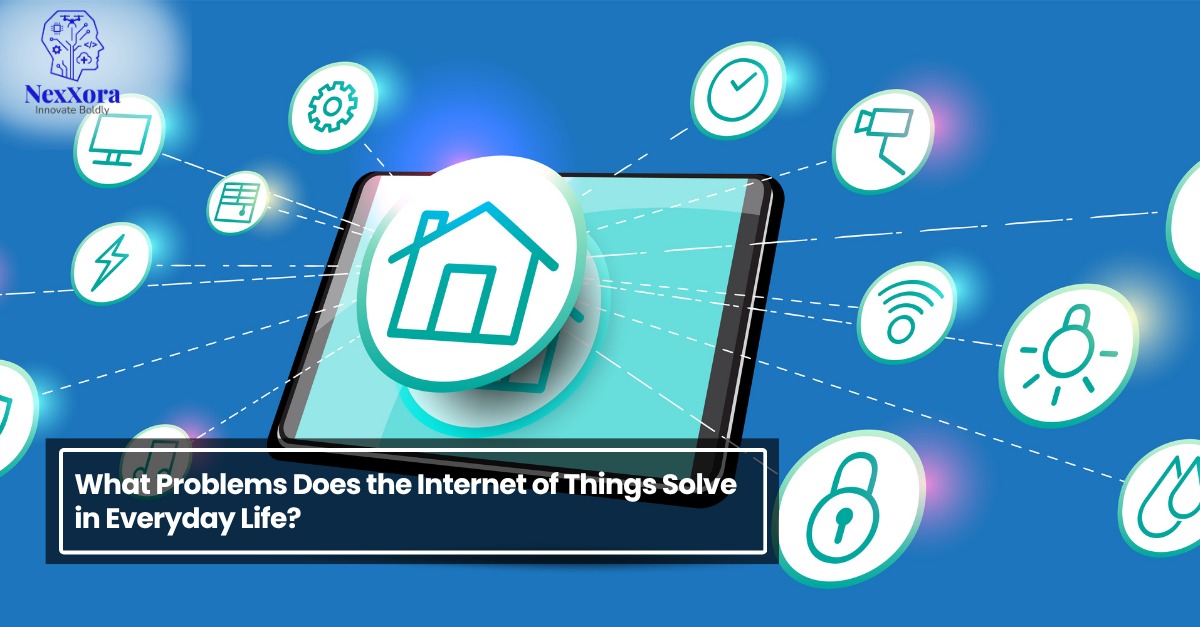
- Introduction: The Rise of Connected Intelligence
- Key Challenges in Everyday Life Without IoT
- Impact of These Challenges
- Sensor Integration and Data Acquisition
- Edge and Cloud Computing
- Connectivity Protocols
- Data Analytics and AI Integration
- Device Management and Security
- Benefits and Real-World Applications
- Future Trends and Innovations
- Frequently Asked Questions (FAQ)
- Conclusion
Introduction: The Rise of Connected Intelligence
Indeed, the internet of things technology has revolutionized the relationship of physical objects with the online realm. By definition, the iot integration services denotes an environment comprising interconnected embedded devices such as sensors, actuators, microcontrollers, and communicators that function as a result of IP-networked exchange of information without involving humans in the process. By 2025, more than 18 billion devices have been used globally, a number estimated to be more than 32 billion in 2030. The phenomenon of extensive machine-to-machine communication has transformed not only into reality but into a new trend for solving daily issues for people and organizations.
Whether we are talking about intelligent thermostats managing energy use at home, predicting equipment failures within large companies, or any other similar problem, the Internet of Things becomes an intermediary linking the real world with online activities. In this blog post, we will discuss the issues addressed by the IoT technology, the techniques used, and the results obtained.
Key Challenges in Everyday Life Without IoT
Prior to the widespread adoption of IoT technology, living spaces were defined by informational blackouts and reactive approaches to problem-solving. Some of the issues included:
- Excessive Resource Use: Consumers had no means to track their utility usage effectively, hence they consumed more than what they needed, causing them to incur additional expenses.
- Unforeseen Equipment Malfunctions: Since there was no constant analysis of conditions in the systems, any problems would become apparent once damage had already occurred.
- Limited Remote Health Care Management: Patients could not monitor their health from afar, and they had to travel to the hospitals even for minor issues, leading to inadequate treatment of some diseases.
- Poor Infrastructure Management in Urban Areas: Traffic jams, waste overflow, and poor lighting would occur since the infrastructure was not interconnected and could not react to changing circumstances.
Impact of These Challenges
Implications for each sector were compounded by the lack of connectivity through the Internet of Things and included economic implications, carbon emission implications, and implications related to the state of public health. There were costs related to unplanned downtime at industrial facilities, which cost approximately $260,000 an hour. The amount of energy wasted by homes was responsible for failing to reach target levels of carbon emissions in cities. Health problems due to the use of reactive treatment methods meant that there were unnecessary hospital visits. Overall, it could be said that there was an inability to act on environmental data.
 Technical Solutions and Methodologies
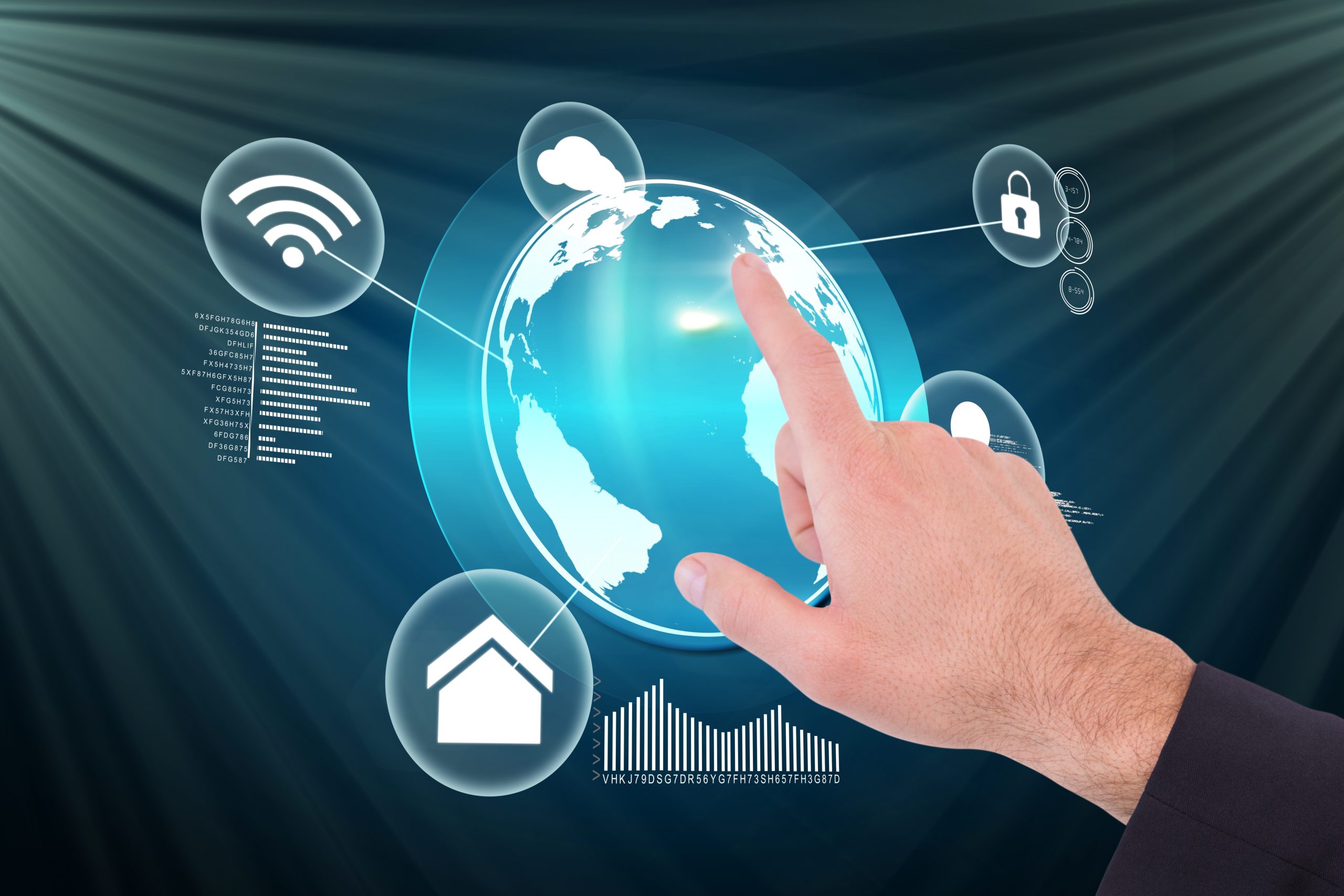
Internet of Things solves this issue through its architecture which is divided into four layers, namely, perception, network, computation, and application layers. Perception layers involve sensors which measure physical quantities such as temperature, pressure, humidity, motion, light intensity, and even biochemical quantities. These quantities are digitized by sensors and transmitted across the network layer using wired and wireless communication channels. The information flows through the network layer and is processed and stored in computer systems where further inference about the data is made.
Sensor Integration and Data Acquisition
The central focus in IoT is the implementation of MEMS (Micro-Electro-Mechanical Systems) sensors, infrared sensors, Hall effect sensors, and electrochemical biosensors. Each one is optimized for measuring particular physical properties or characteristics. Sensor fusion technology involves aggregating the information from different sensors using algorithms to increase measurement precision and accuracy. With respect to smart home applications, the fusion of occupancy sensors with temperature and light information enables the fine-tuning of HVACs, reducing energy usage by up to 30% when contrasted with timed thermostats. The process of analog-to-digital conversion transforms the analog sensor signals into digital form.
Edge and Cloud Computing
An important characteristic of the current implementations of Internet of Things solutions lies in the intelligent division of computing resources between edge devices and the cloud. In edge computing, computation moves from the cloud to the device or gateway level, which addresses issues related to latency, bandwidth usage, and autonomy in cases of non-existent connectivity. The use of microcontrollers, like those from the ARM Cortex-M family and RISC-V microcontrollers, allows for inference through TinyML in the edge nodes, thus providing the possibility of detecting anomalies directly on the device without using any cloud service. On the other hand, cloud services like Amazon IoT Core, Microsoft IoT Hub, and Google Cloud IoT add functionalities such as big data analysis, OTA firmware updating, and digital twins.
Connectivity Protocols
Internet of things utilizes a heterogeneous protocol stack based on specific constraints associated with applications in terms of range, power, bandwidth, and latency requirements. The commonly used protocols are:
- MQTT: A messaging protocol suitable for low-power and low bandwidth devices. It is widely adopted in remote monitoring applications.
- Zigbee & Z-Wave: Both are low power mesh network protocols used for device-to-device interoperability and communications in smart homes.
- LoRaWAN: A long-range and low power protocol used for applications such as agriculture sensors, utilities metering, and smart cities.
- 5G NR (New Radio): High throughput and ultra-low latency mobile broadband protocol for critical Internet of things applications including autonomous driving and remote surgeries.
Data Analytics and AI Integration
What matters about the internet of things is not its ability to gather information but its ability to make sense of it. Technologies for stream processing like Apache Kafka and Apache Flink are able to ingest and process large volumes of fast-moving data from sensors in real time. Machine learning algorithms, comprising time series anomaly detection, RNNs, and gradient boosting classifiers, are built using past data about operations to predict equipment deterioration, monitor for intrusion incidents, and perform logistics optimization in milliseconds. With respect to smart agriculture, internet of things technology powered by artificial intelligence correlates soil moisture readings, satellite spectroscopy images, and weather API inputs to provide precise irrigation advice that cuts down water usage by up to 20–40%.
Device Management and Security
A scalable deployment of the internet of things requires a strong lifecycle management process that includes provisioning, configuring, monitoring, and decommissioning. Device management tools ensure mutual transport layer security using certificates to guarantee that only authorized devices communicate inside the network infrastructure. Integrity of firmware is maintained using cryptographic signing of code and secure boot processes, which mitigate any attack from the supply chain. The zero trust network architecture (ZTNA), which requires continuous identity validation for every communication across the network, has emerged as the security standard for enterprise-level internet of things deployments.
Benefits and Real-World Applications
There are tangible benefits from the internet of things in many areas of life. With regard to smart homes, there are automated demand response solutions that use pricing signals from utility companies to adjust loads of appliances for savings on the bill of home electricity consumption. There are wearable ECG monitors and blood sugar sensors that transmit data of patients’ health status to clinical information platforms in healthcare, allowing doctors to monitor arrhythmia and glycemic levels of patients and preventing hospitalization of patients. Traffic lights in smart cities are equipped with detectors and computer vision solutions, which help improve the flow of vehicles by 20% to 25%. IoT is used in industry for monitoring assets using vibration analysis and thermal imaging technologies.
Future Trends and Innovations
The future of the internet of things will be dictated by many concurrent technological factors. Matter is a unified connectivity platform endorsed by Apple, Google, and Amazon that facilitates seamless interoperability between devices, thereby ending any kind of vendor lock-in. The digital twin has gone beyond being a representation of an asset; it now comprises physics-based modelling which simulates the actual performance of systems, thus allowing for predictive simulation in sectors such as manufacturing and urban planning. With ambient intelligence, there will be the combination of the internet of things with contextual AI, whereby environments will respond intelligently to the behavioral patterns of their users without any prior programming. Additionally, new forms of energy harvesting technology have done away with the reliance on batteries, allowing for perpetual sensor nodes.
Frequently Asked Questions (FAQ)
1.What is the Internet of Things (IoT) in layman’s terms?
The internet of things is a concept that describes a network consisting of devices containing sensors and software for data acquisition and exchange over the internet to solve practical issues.
2.How does the internet of things save homeowners money on energy bills?
IoT technology allows thermostats and demand response systems to track usage patterns in real-time, optimizing energy usage and cutting down on monthly bills by 30 percent.
3.Is the internet of things safe to use?
Most internet of things implementations employ authentication using mutual transport layer security, zero trust network architectures, and secure firmware updates.
4.Which type of connectivity is used by the internet of things?
The internet of things uses several connectivity protocols depending on the needs of particular devices, including MQTT, Zigbee, LoRaWAN, and 5G NR.
5.How does the internet of things contribute to modern healthcare?
IoT wearable devices can transmit patients’ vital statistics in real-time to clinical information systems, allowing for remote diagnostics and preventing hospitalization.
6.What is edge computing and its relation to IoT?
The internet of things makes use of edge computing techniques, which consist of processing sensor data generated by the internet of things devices.
Conclusion
The conclusion is definitive: the internet of things has evolved into a sophisticated, multi-layered systems architecture that transforms physical environments into intelligent, data driven ecosystems. Platforms like Nexxora enable enterprises to operationalize IoT through edge-cloud integration, real-time analytics, and AI-powered automation frameworks. By leveraging Nexxora’s advanced digital infrastructure capabilities, organizations can optimize energy, enhance predictive maintenance, and build scalable, sustainable systems transitioning from reactive operations to proactive, intelligent environments.



No comment