
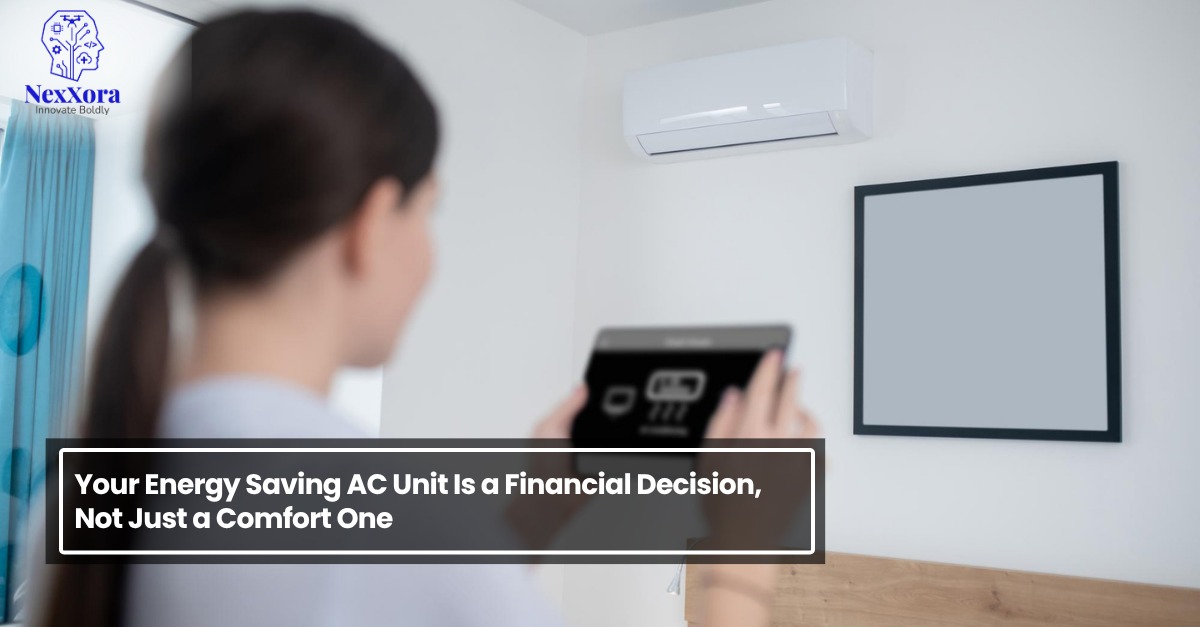
For most people who care about their comfort, what comes to mind when hearing about air conditioning is relief from hot weather rather than the consumption of kilowatt hours and electricity expenses. Nevertheless, understanding how a modern energy-saving air conditioner functions plays a crucial role in making the right choice. From a physics perspective, all ACs are designed to remove heat from indoor air using a refrigerant cycle and release it outside.
With the help of modern technologies, this process is enhanced through variable-speed compressors, advanced heat exchange design, and power consumption monitoring. These innovations ensure that the appliance operates at lower power levels most of the time, significantly reducing energy usage compared to conventional systems. Regular energy saving air conditioner service further ensures that the system maintains optimal efficiency, extends its lifespan, and continues delivering both comfort and cost savings over time.
- Why Choosing an Energy Saving AC Unit Is a Smart Financial Decision
- Key Features of a Modern Energy Saving AC Unit
- How to Select the Right Energy Saving AC Unit
- Maintenance Tips to Maximize the Performance of Your Energy Saving AC Unit
- Pros and Cons of Investing in an Energy Saving AC Unit
- FAQs About Energy Saving AC Units
- Final Thoughts: Turning Comfort Into Long-Term Savings
Why Choosing an Energy Saving AC Unit Is a Smart Financial Decision
Investment in an energy-efficient air conditioning unit is not only an eco-friendly step but one of the best investments that homeowners and businesses could make. As reported by the U.S. Department of Energy (2024), air conditioning represents around 12% of annual total energy spending in households. The installation of an efficient air conditioner can save 20-50% on cooling costs.
Consider the financial math over a 10-year lifecycle:
- A standard 3-ton AC system running on SEER 13 consumes around $600-$800 yearly on electricity bills (assuming average $0.13/kWh in America).
- The same energy-efficient AC system running on SEER 22 would lower that cost to around $350-$450 yearly, resulting in savings between $250 and $350 each year.
- In ten years, those savings would amount to about $2,500-$3,500, which might even surpass the initial extra cost incurred by buying the efficient system.
- Most utilities provide rebates for purchasing ENERGY STAR-rated systems ranging between $100-$500.
Key Features of a Modern Energy Saving AC Unit
Energy Efficiency Ratio (EER) and Seasonal Energy Efficiency Ratio (SEER)
Two critical values determine the efficiency of any energy-saving air conditioner unit. The first one is the EER or Energy Efficiency Ratio, which measures the energy-saving ratio on an instant basis at a particular outside temperature, normally 95 degrees Fahrenheit. It divides the BTU of cooling energy output against watts of electrical input. If the value of the EER is high, then the efficiency of the air conditioner is high. The second parameter is SEER or Seasonal Energy Efficiency Ratio. It calculates the efficiency of the air conditioner throughout the year. As per January 2023, the US Department of Energy made it mandatory for new units to have a minimum SEER of 14 for northern regions and 15 for southern regions.
Inverter Technology in Energy Saving AC Units
Classic fixed-speed compressors function on the principle of binary operation; they run either on or off, thus generating surges of electrical energy and variations in temperatures. Variable speed compressors in inverters of contemporary energy-efficient air conditioners utilize pulse width modulation technology to enable variable speed of the compressor ranging from 10 percent to 100 percent. Pulse width modulation lowers maximum power consumption by 40 percent, increases longevity of compressors by reducing mechanical wear, and controls room temperatures to within ±0.5°C of the setting point.
Smart Features That Improve Energy Savings
Contemporary energy saving AC units incorporate intelligent features that multiply their efficiency benefits:
- Occupancy sensors and artificial intelligence-based load forecasting algorithms for pre-cooling spaces ahead of peak-demand hours.
- Demand response capability — the system can interface with intelligent grids to move loads in times of high tariffs.
- Variable refrigerant volume (VRV) technology in multi-zones, which can simultaneously cool and heat multiple zones.
- Geofencing feature that ensures operation only when users are present within a specific GPS boundary.
- Remote diagnostics through IoT integration, making it possible to schedule maintenance before efficiency drops.
How to Select the Right Energy Saving AC Unit
Choosing the Correct Size for Maximum Efficiency
Oversizing is the most typical mistake when choosing an AC unit. If an oversizing energy saving AC system is installed, it will not only waste energy but also wear out mechanical parts faster than they should, and it will not be able to remove humidity from the room properly. ACCA Manual J Load Calculation is the standard approach used in the industry to calculate the BTU that a specific space requires based on the room size, insulation quality (R-value), number of windows, their exposure to sunlight, occupancy rate, and climate conditions (degree-days for cooling). The average BTU requirement per sq ft is 20.
Understanding Energy Star Ratings and Efficiency Labels
The ENERGY STAR rating program, conducted by the Environmental Protection Agency (EPA), designates energy-efficient air conditioners that perform better than federal minimum standards by 10%. In terms of room air conditioners, the ENERGY STAR rating mandates an EER minimum of 12. For central air conditioning systems, the ENERGY STAR Most Efficient Rating program (for 2024) specifies SEER2 to be ≥22 and EER2 to be ≥12. SEER2 is the newer test method that was adopted in 2023 and which employs a higher external static pressure of 0.5 inches water gauge (W.G.) compared to the old 0.1 inches.
Additional Features to Look for in an Energy Saving AC Unit
- Variable stage compressors for fine adjustment of capacity.
- High efficiency air filters (MERV 13 or equivalent to HEPA filters) that do not add much static pressure.
- Use of low GWP refrigerant: R32 or R454B with 68 to 78% reduction in global warming potential compared to the current R410A.
- Option of desuperheater feature for water heating applications that save energy costs of 30%.
Maintenance Tips to Maximize the Performance of Your Energy Saving AC Unit
Even the highest-rated energy saving AC unit loses efficiency without regular maintenance. Studies show that a dirty evaporator coil can reduce efficiency by up to 30%, effectively eliminating the gains from the unit’s efficiency rating. Prioritize the following:
- Regular filter change or cleaning after 30-90 days according to the quality of air and usage pattern; a dirty filter makes the blower motor work extra hard and increases energy consumption.
- Professional cleaning of the evaporator and condenser coils annually to eliminate the buildup of fouling that results in poor heat transfer coefficient.
- Refrigerant level check for any kind of under- or overcharge since it decreases the COP by 5-20%.
- Condensate drain line cleaning to stop the growth of organisms inside the system that block air flow.
- Electrical connection and capacitor checking, because bad capacitors decrease the efficiency of the motor and lead to compressor breakdown.
- Sufficient space for ventilation of the outdoor condenser unit; a minimum of 24 inches should be free from obstacles.
Pros and Cons of Investing in an Energy Saving AC Unit
Pros
- 20%-50% decrease in cooling energy consumption expenses, resulting in substantial cost savings over time.
- Better comfort reliability because of better temperature and humidity control (+/-0.5°C variation).
- Low environmental impact; the SEER 20 system emits 35% less CO₂ during each cooling operation compared to the SEER 13 system.
- Qualification for federal tax credits (25C credit); eligible for up to $600 in tax credits for a central AC unit under the Inflation Reduction Act.
- Increased durability of equipment because of lower mechanical stress caused by inverter control.
- Increased property value due to the improved efficiency of heating, ventilation, and air conditioning equipment.
Cons
- Costlier initial investment – the cost for better savings in energy efficiency is around 20-40% higher compared to ordinary ones.
- High chances of higher maintenance expenses due to complex circuitry in the inverter in case of any failure out of warranty.
- Professional installation by technicians well-acquainted with the new refrigerants used such as R-32 and R-454B.
- Long payback period of 3-7 years necessitating long occupation of the place.
FAQs About Energy Saving AC Units
Q1: What is a good SEER rating for an energy saving AC unit?
A SEER2 rating of 16 or above meets current federal minimums, but SEER2 22+ qualifies for ENERGY STAR Most Efficient status and offers the best long-term savings.
Q2: Does inverter technology really make a difference in electricity bills?
Yes. Inverter-driven compressors eliminate the high-current inrush of fixed-speed systems and run at the precise output needed, reducing energy consumption by 30–40% compared to conventional on/off compressors.
Q3: How often should I service my energy saving AC unit?
Schedule professional maintenance once a year — ideally before the cooling season — and clean or replace filters every 30–90 days to sustain rated efficiency.
Q4: Does Nexxora service all brands of energy saving AC units?
Yes. Nexxora’s certified technicians are trained to service all major brands of energy saving AC units, from inverter split-systems to multi-zone VRF setups, ensuring your unit performs at peak efficiency.
Q5: Can Nexxora help me choose the right energy saving AC unit for my space?
Absolutely. Nexxora conducts a full ACCA Manual J load calculation for your space and recommends energy saving AC units matched to your specific efficiency goals, budget, and building characteristics.
Q6: What maintenance packages does Nexxora offer for energy saving AC units?
Nexxora offers annual maintenance contracts that include coil cleaning, refrigerant charge verification, electrical inspection, and performance reporting — keeping your energy saving AC unit at its rated efficiency year-round.
Final Thoughts: Turning Comfort Into Long-Term Savings
An energy saving AC unit is fundamentally an investment vehicle — one that pays dividends in reduced utility bills, tax credits, increased property value, and lower carbon emissions every single month of its operational life. The upfront cost premium is real, but the financial return over a 10–15 year lifecycle consistently outpaces it. As electricity tariffs continue to rise (U.S. average residential rates increased 5.2% year-over-year in 2024 per the EIA), the economics of high-efficiency cooling only strengthen.
Whether you are upgrading an aging system, sizing a new installation, or simply trying to reduce a climbing electricity bill, the core principle remains the same: the efficiency of your energy saving AC unit is directly correlated to the money staying in your pocket.
If you want expert guidance on selecting, installing, or maintaining a high-performance energy saving AC unit, Nexxora brings together certified HVAC engineers, real-world performance data, and a rigorous service process built around one goal: keeping your system at its rated efficiency for every year of its life. For homeowners and businesses serious about the financial math of cooling, that expertise makes all the difference.






No comment