
- Introduction: The Strategic Evolution of Contract Manufacturing
- Key Challenges in Traditional Manufacturing Models
- Impact of These Challenges on Business Growth
- Technical Solutions: How Contract Manufacturing Companies Address These Challenges
- Benefits and Real-World Applications
- Future Trends and Innovations in Contract Manufacturing
- FAQ Section
- Conclusion: From Vendor to Strategic Growth Partner
Introduction: The Strategic Evolution of Contract Manufacturing
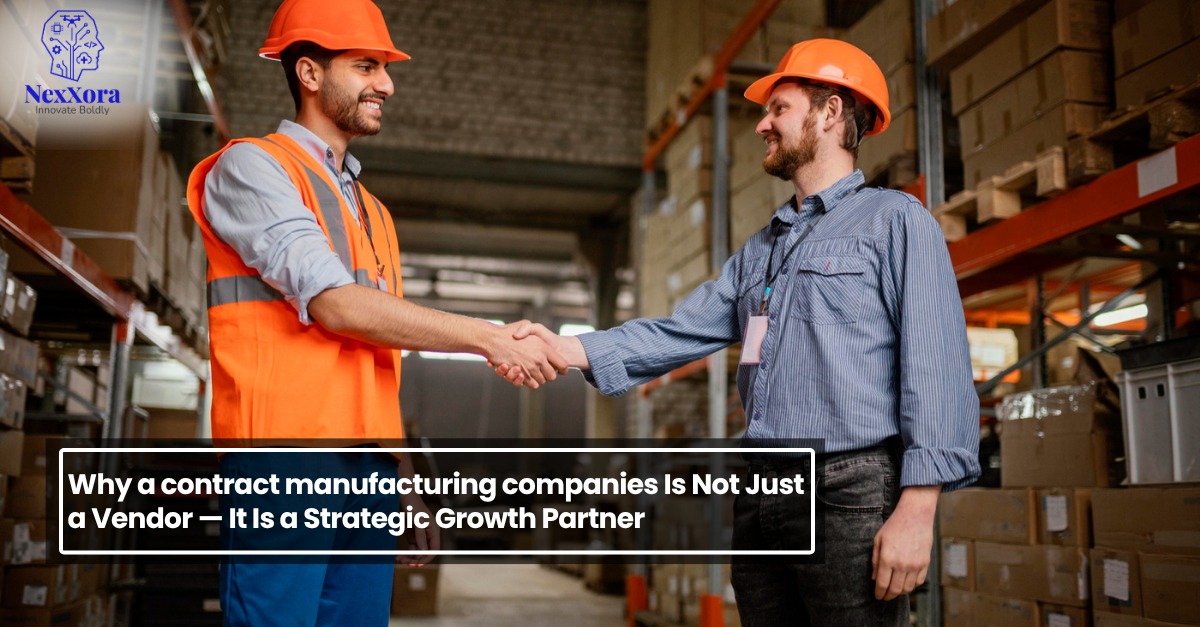
In today’s world, where enterprises operate in industries ranging from aerospace to consumer electronic products and medical devices to industrial automation solutions, strategic cooperation with a contract manufacturing firm is not an option but a necessity for competitive advantage.
Key Challenges in Traditional Manufacturing Models
High Capital Expenditure (CapEx) Requirements
Building up manufacturing capacity for exclusive use requires large amounts of financial investment. Such costs as the construction of a CNC machine shop, the installation of clean room facilities, SMT line setup, and metrology machines can range to tens of millions, all money that could have been invested in R&D, business development, and hiring skilled people. This is an inherently unfavorable business situation for medium-sized businesses and emerging startups.
Operational Inefficiencies
The in-house manufacturing process is often faced with production bottlenecks, inefficiencies in OEE, and yield losses. Lack of process engineering specialists and lean manufacturing skills makes implementation of Six Sigma, statistical process control, and Kaizen practices difficult for an organization.
Talent and Skill Gaps
It takes expertise in engineering and other sciences such as electronics, computer programming, and materials science for contemporary manufacturing firms. It becomes hard and costly for companies that do not specialize in manufacturing to hire experts such as robotics specialists and quality control auditors.
Regulatory and Compliance Complexity
Compliance with regulations like ISO 9001, AS9100, ISO 13485 (for medical devices), IATF 16949 (for automotive products), and RoHS/REACH standards mandates compliance management systems. Non-compliances will incur hefty penalties since audits that fail to comply will often lead to recalls and market withdrawal of the products involved.
Impact of These Challenges on Business Growth
Slower Time-to-Market
Manufacturing challenges inevitably lead to extended periods for new product introductions (NPI). Each day delayed translates to a loss of revenue, first mover advantage, and risk of being outpaced by competing firms.
Reduced Innovation Capacity
If engineering and management resources are focused on production fires, the mental capacity for disruptive innovation cannot be achieved. While this may not show up on balance sheets, its impact is critical.
Increased Operational Risk
Logistical breakdowns, political instability, and dependence on singular sources make an organization that relies heavily on manufacturing vulnerable to serious operational problems. This was demonstrated during the time of the pandemic with the virus known as COVID-19.
Limited Scalability
Proprietary facilities are inherently inflexible. Scaling production up or down in response to demand variability requires either costly overcapacity or painful under-utilization — neither of which aligns with modern agile business models.
Technical Solutions: How Contract Manufacturing Companies Address These Challenges
Asset-Light Manufacturing Model
Best contract manufacturing firms use an asset-light strategy that transforms fixed capital expenditures (CapEx) into variable operational expenses (OpEx). Customers can quickly leverage cutting-edge manufacturing facilities without weighing down their balance sheets with fixed costs, freeing up capital for higher-profit endeavors like product innovation, branding, and marketing.
Advanced Manufacturing Technologies
Best-in-class contract manufacturers constantly invest in state-of-the-art manufacturing equipment such as multi-axis computer numerical control (CNC) milling, selective laser sintering (SLS), automated reflow soldering with AOI, and cobotics. This allows them to implement high mix-low volume (HMLV) manufacturing processes along with high-volume standardization.
Integrated Supply Chain Management
By integrating their procurement, materials planning, and logistics process vertically, contract manufacturing firms can achieve economies of scale and benefit from their relationships with suppliers to cut down on component lead time and improve their inventory holding costs. MRP and ERP systems give such companies full visibility into their supply chains.
Quality Assurance and Compliance Systems
Firms that have been in the business for some time possess QMS that have been validated and approved under various international quality systems. Quality management systems encompass processes for Incoming Inspection of Components, In Process Inspection, and Outgoing Inspection to ensure that all the manufactured goods meet customer expectations and comply with regulations without placing the burden of compliance on the customer side.
Design for Manufacturing (DFM) & Prototyping
Contract manufacturing firms are involved in the design phase of products to help identify any producibility issues early enough in the lifecycle before any investments in tools are made to mass-produce them. This helps to avoid costly ECOs and move faster through the prototyping stage to full production.

Benefits and Real-World Applications
Accelerated Time-to-Market
By virtue of having validated production processes and supply chains, contract manufacturing organizations are able to achieve reductions in NPI cycles of up to 30-50% over internal production start-up cycles. Such gains are immediate and translate into direct increases in revenues and competitive advantage.
Cost Optimization
With their economies of scale, efficiencies in production processes, and avoidance of non-productive capital investment, contract manufacturing organizations are able to achieve reductions in landed costs of up to 15-40% compared to internal production. The TCO model clearly favors outsourcing strategies for any production process other than those highly proprietary in nature.
Scalability and Flexibility
Contract manufacturing organizations provide clients with the ability to take advantage of flexible capacity. This allows organizations to increase capacity when demand increases and reduce capacity when demand decreases.
Focus on Core Competencies
Through offloading their manufacturing challenges to specialized contract manufacturers, client firms get their executives and engineers freed up for activities that really matter, such as product innovations, customer experience improvement, and brand equity building the key differences between the competition.
Industry Use Cases
In various sectors, contract manufacturers are adding significant strategic value:
Medical Devices: Production compliant with 21 CFR Part 820 of FDA with full DHF documentation
Aerospace and Defense: Manufacturing compliant with AS9100 standards with ITAR-compliant logistics processes
Consumer Electronics: SMT assembly with high-speed process and AFT/burn-in tests
Industrial Automation: Machining and electromechanical assembly for motion control systems
Future Trends and Innovations in Contract Manufacturing
Industry 4.0 Integration
Advanced contract manufacturing firms are making use of IIoT sensor systems, digital twin modeling tools, and cyber-physical production systems (CPPS) which provide real-time process tracking, predictive maintenance, and remote process monitoring – providing unheard-of levels of operational transparency for client stakeholders.
AI-Driven Production Optimization
The application of machine learning to manufacturing process data streams is providing advanced contract manufacturing firms with dynamic scheduling optimization, real-time defect detection through computer vision, and predictive yield management systems. These capabilities are quickly becoming must-haves for contract manufacturing leaders.
Sustainability and Green Manufacturing
ESG factors are driving changes in manufacturing procurement priorities. Leading-edge contract manufacturing companies are installing closed-loop recycling systems, sourcing renewable power sources, instituting carbon accounting practices, and conducting supplier sustainability assessments – ensuring that clients fulfill their Scope 3 emissions reduction targets.
Global Supply Chain Diversification
As a reaction to increased supply chain risk in geographically concentrated global manufacturing hubs, top-tier contract manufacturing companies are creating production facilities across multiple geographic locations – allowing clients to adopt China-Plus-One, nearshoring, and dual sourcing strategies.
FAQ Section
What sets apart strategic contract manufacturing companies from traditional job shops?
The difference is that strategic contract manufacturing firms provide full value chain integration, including DFM, logistics, and regulatory compliance, whereas job shops only concentrate on executing the manufacturing process.
How can contract manufacturing companies protect intellectual property?
Contract manufacturing organizations provide strong IP protection by signing non-disclosure agreements (NDAs), implementing data segmentation policies, restricting entry into manufacturing facilities, and incorporating liability clauses into contracts.
What should I look out for in terms of certification when picking contract manufacturing companies?
It is crucial to check for appropriate certifications based on your industrial sector, including ISO 9001 (quality standard), ISO 13485 (health care products), AS9100 (aircraft), IATF 16949 (automotive), and UL/CE mark certifications.
Is it feasible for contract manufacturing companies to meet demands for low volumes and complex manufacturing processes?
Specialized contract manufacturing firms can operate efficiently in HMLV (high-mix, low-volume) settings using automation and fast setups to preserve cost-effectiveness across various product variants.
How do contract manufacturing companies deal with supply chain disruptions?
The best contract manufacturing organizations adopt multiple-tier supplier qualification strategies, buffer stock procurement, and sourcing alternatives to guarantee production flow despite material shortages or logistics interruptions.
Conclusion: From Vendor to Strategic Growth Partner
Nexxora offers an innovative perspective of the Contract Manufacturing Organization (CMO)’s role as a business growth catalyst instead of a vendor that supplies products. This is achieved by leveraging modern manufacturing techniques and systems such as Quality Management Systems, compliance regulations, and effective logistics management.Instead of cost optimization-based strategies, Nexxora focuses on capability matching, process development, and technology adoption. Such a partnership helps organizations optimize their operations, speed up processes, and create highly efficient manufacturing systems. In other words, it converts manufacturing from a cost center to a key competitive advantage for organizations.





No comment