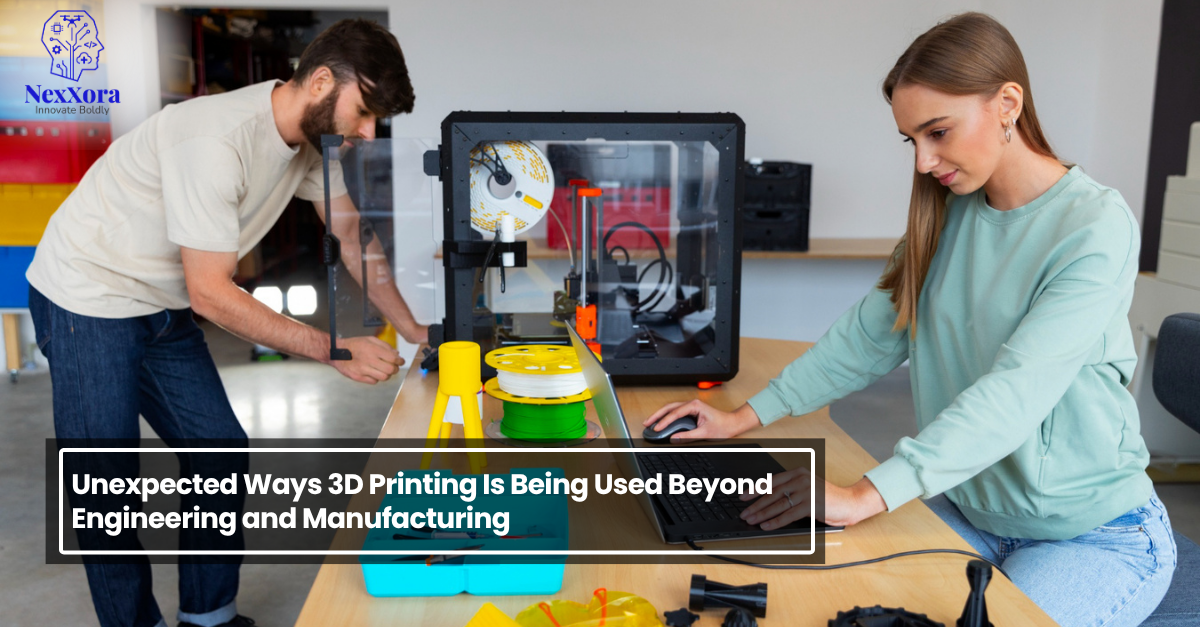
Is 3D Printing Really Nothing More Than an Engineering Tool? Not Anymore
For a long time, 3D Printing has been seen as something that engineers could use within their laboratory settings to test mechanical prototypes. This perception has created an idea, that additive manufacturing is useful in industry alone. However, this concept does not hold any longer.
Currently, 3D Printing has become a tool used across various industries, including healthcare, educational institutions, fashion industries, and even food technology sectors. The changes have gone deeper than just being about technologies because now, 3D Printing can be seen more strategically, especially with the growing demand for 3D Prototype Printing Services in India across multiple sectors.
To begin with, 3D Printing or additive manufacturing refers to the process of creating physical objects using Computer-Aided Design or CAD models. As opposed to subtractive manufacturing, 3D printing optimizes materials and creates very complicated structures.
Why Is 3D Printing Suddenly Showing Up Everywhere?
Rapid adoption of 3D Printing to new industries results from technological convergence between many emerging technologies. Innovations in the field of materials, progress in generative design software, as well as the existence of high-speed printers, have facilitated access to this type of technology.
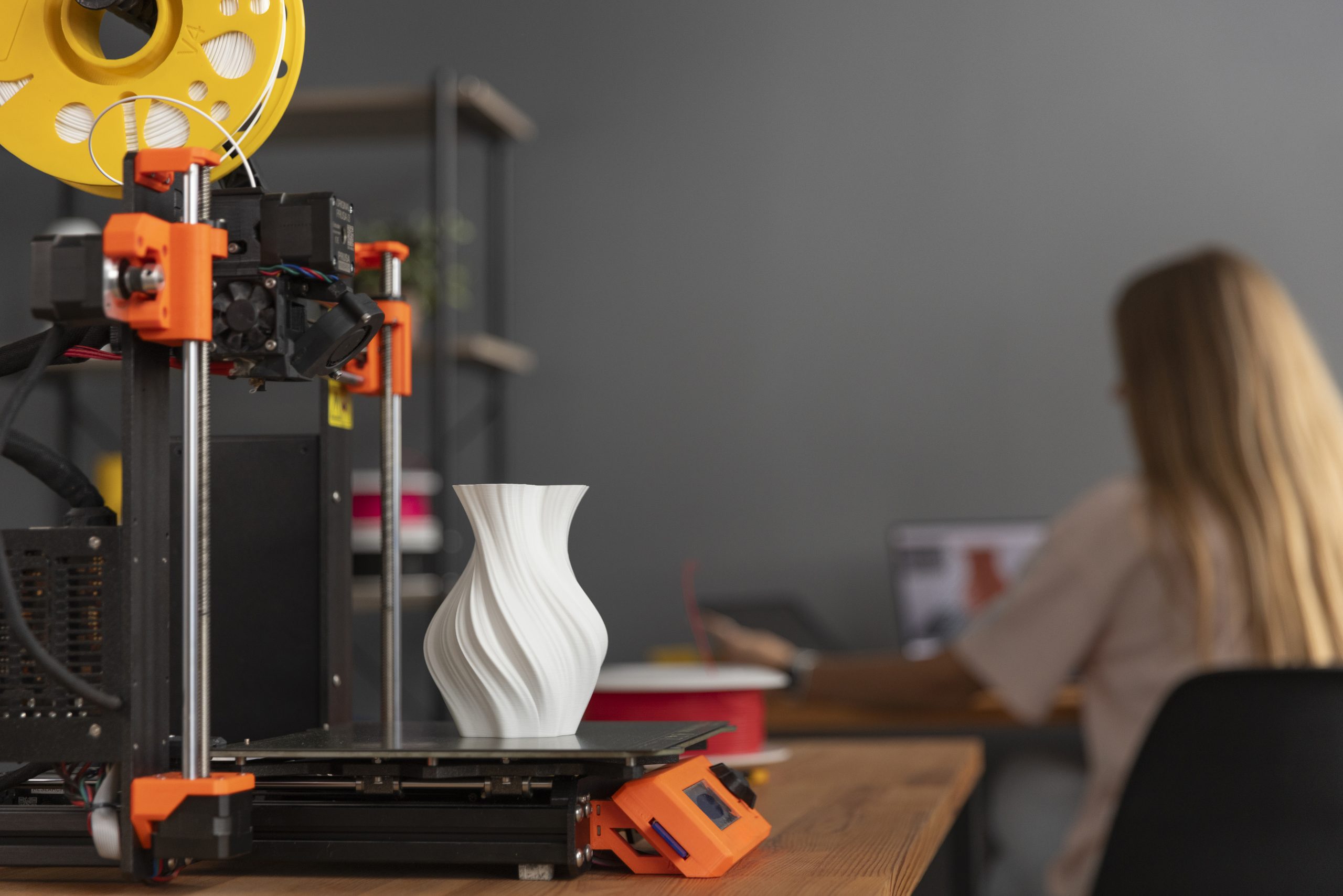
Key technical drivers include:
– Algorithms to automatically generate optimized structural designs
– Topology optimization techniques for creating strong but lightweight parts
– High-performance materials such as composite materials and bio-compatible polymers
– Linking into digital supply chains
Such abilities enable companies to take their products from idea stage to tangible reality within much shorter time frames. As an illustration, where it would have taken weeks before, it now only takes hours to accomplish.
From Hospitals to Kitchens: Where Is 3D Printing Being Used Today?
Another interesting aspect about 3D printing technology is its flexibility. It can no longer be considered for just making mechanical components. It is now being used to solve practical problems in different industries.
Healthcare
Accuracy is essential in health care. With 3D Printing, customized implants, prosthetics, and surgery can be produced. The accuracy of technologies like SLA (Stereolithography) goes to microns, which guarantees precise surgery results. Moreover, advances in bioprinting are making strides toward developing printed organs.
Fashion and Creative Industries
Designers are applying 3D Printing technology to break new ground creatively. Latticed designs, personalized accessories, and intricate patterns can be created with parametric modeling. The constraints of conventional manufacturing techniques have been done away with.
Food Technology
Food printing might appear to be something that can only exist in the future, but it is actually being researched today. Through the production of specialized foods and unusual flavors, 3D Printing allows for creativity in the culinary arts.
Architecture and Construction
The application of 3D Printing is being used by architects in visualization as well as construction projects. Rapid prototyping can be achieved, while in other instances, buildings are actually printed through the use of specific material.
Consumer Products
The concept of mass customization is coming into existence. The organizations are now able to customize their products without adding cost to their processes. This process is applicable in manufacturing eyewear, shoes, and household items.
If It’s So Powerful, What’s Holding 3D Printing Back?
Despite its advantages, 3D Printing is not a one-size-fits-all solution. There are several technical and operational challenges that must be considered.
Technical Challenges
– Limited range of materials suitable for high-stress applications
– Surface finish often requires post-processing such as sanding or machining
– Mechanical properties can vary depending on print orientation
Operational Challenges
– Slower production speed compared to traditional methods like injection molding
– High initial investment for industrial-grade printers
– Requirement for skilled professionals to handle CAD and slicing software
Different technologies also come with trade-offs:
FDM is cost-effective but offers lower precision.
SLA provides high accuracy but uses fragile materials.
SLS delivers strong parts but at a higher cost.
DMLS enables metal printing but involves complex processes.
Understanding these limitations is crucial for making informed decisions.
What Does the Future of 3D Printing Look Like?
The future of 3D Printing is not about replacing traditional manufacturing but complementing it. Hybrid manufacturing models, which combine additive and subtractive processes, are gaining traction.
Emerging trends include:
-Distributed manufacturing entails localization of production
– Artificial Intelligence-powered design tools for automatic modeling
– Sustainability through the use of sustainable materials and recycling
– Digital inventories which minimize physical storage requirements
It is projected from industrial reports that the market value of additive manufacturing will cross $80 billion by the year 2030. The reasons behind such an expectation include greater demand for customization and fast production..
Frequently Asked Questions
1. What are unexpected uses of 3D Printing?
It is used in healthcare, fashion, food, and architecture beyond traditional manufacturing.
2. Is 3D Printing suitable for small businesses?
Yes, it is ideal for prototyping and low-volume customized production.
3. Can 3D Printing replace traditional manufacturing?
No, but it complements it by enabling flexibility and faster innovation.
4. What does Nexxora offer in 3D Printing?
Nexxora provides advanced 3D prototype printing services for multiple industries.
5. Why choose Nexxora for 3D Printing services?
They combine engineering expertise with modern additive manufacturing technologies.
6. Can Nexxora handle custom requirements?
Yes, they offer tailored solutions for startups and enterprises.
Conclusion
The first misconception about 3D printing is that it is an exclusive process in the field of engineering and manufacturing. In fact, 3D printing technology will be more widely applied in various industries in the coming years.
As companies strive for innovation speed and cost-effective production processes, the importance of professional service providers cannot be underestimated. Nexxora is playing a vital role in this respect by providing cutting-edge 3D printing services that match real business requirements.
The next-generation 3D printing goes beyond hardware and material considerations. It concerns the whole paradigm shift of how we do design, manufacturing, and innovation.





No comment